


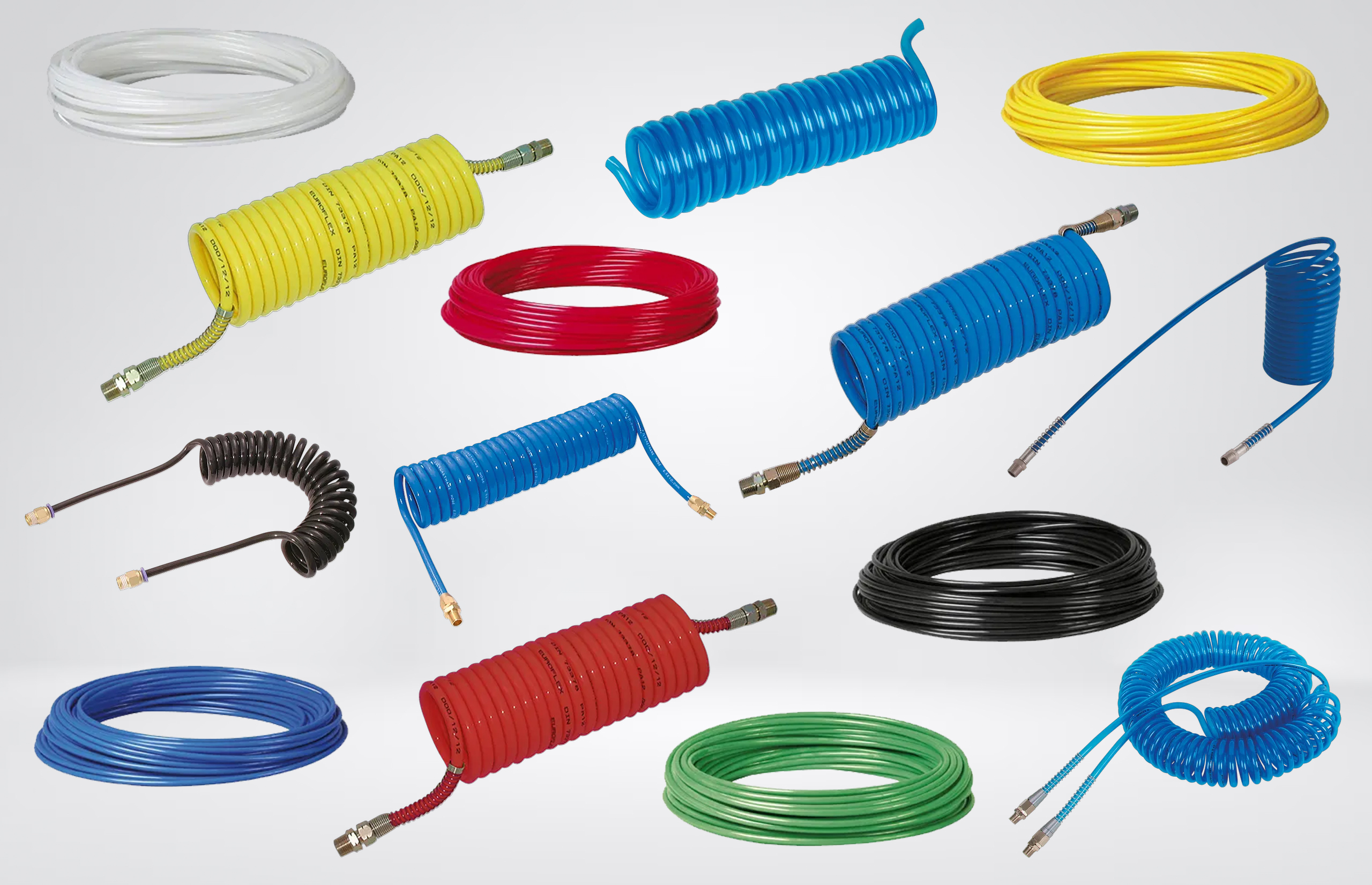
In pneumatic and fluid transfer systems, tubing selection is rarely a minor detail. The wrong material choice leads to premature failure, air leaks, reduced efficiency, and unplanned downtime. Nylon and polyurethane tubing are two of the most commonly specified materials, yet they behave very differently under pressure, temperature, and mechanical stress.
This guide breaks down those differences in practical terms, helping you choose the right tubing for your application rather than relying on assumptions or price alone.
Understanding Nylon and Polyurethane Tubing
Before comparing performance, it is important to understand how these materials behave in real systems. On paper, both nylon and polyurethane tubing can carry compressed air or fluids, but how they respond under load, movement, and environmental exposure is where the difference becomes critical.
What is Nylon Tubing?
Nylon tubing is a semi-rigid thermoplastic known for its strength, pressure resistance, and durability. It is widely used in pneumatic control systems, automotive applications, and industrial machinery where structural integrity matters.
Nylon performs well in installations where tubing needs to hold its shape under pressure. It resists kinking better than softer materials and maintains a consistent internal diameter, which is critical for stable airflow and predictable system performance.
This is why nylon tubing is commonly used in fixed installations and high-pressure environments.
What is Polyurethane Tubing?
Polyurethane tubing is a flexible elastomer designed for applications where movement and routing flexibility are essential. It is commonly used in automation systems, robotics, and compact machinery where space is limited.
Unlike nylon, polyurethane behaves more like a rubber-based material. It can flex repeatedly without cracking, making it ideal for systems with constant movement or vibration.
Polyurethane is often chosen to simplify installation and reduce stress on fittings in dynamic systems.
Key Performance Differences That Impact Applications
Material selection should always come back to how the system operates in reality, not just what looks suitable on a datasheet. Nylon and polyurethane differ in several critical areas that directly affect performance, reliability, and lifespan.
Flexibility and Bend Radius
Polyurethane tubing offers significantly tighter bend radii, allowing it to route through compact machinery without the need for elbows or additional fittings. This reduces potential leak points and speeds up installation.
Nylon is stiffer and holds its form. While this can make installation more structured, it provides stability once installed.
A common issue arises when nylon is forced into tight routing. Over time, stress builds at connection points, leading to cracks or leaks that were avoidable at the specification stage.
Pressure Resistance
Nylon tubing typically handles higher working pressures than polyurethane. It maintains its shape under load and is less prone to expansion.
Polyurethane will expand slightly under pressure. In low-pressure systems this is not usually an issue, but in higher-pressure applications it can lead to inconsistent performance and early wear.
This is a frequent failure point in compressed air systems where polyurethane is selected for flexibility but is pushed beyond its intended pressure range.
Abrasion and Wear Resistance
Polyurethane generally performs better in applications where tubing is exposed to abrasion or constant movement. It can withstand repeated contact without degrading as quickly.
Nylon performs well in protected environments where abrasion is minimal but strength is required.
Using nylon in a moving application often leads to fatigue cracking, particularly near fittings where stress is concentrated.
Temperature Performance
Nylon tubing handles higher temperatures more effectively, making it suitable for applications near compressors, engines, or heat-generating equipment.
Polyurethane remains flexible at lower temperatures, but prolonged exposure to higher temperatures can accelerate degradation.
Temperature is often overlooked during specification, yet it is one of the most common causes of premature tubing failure in plant environments.
Explore the Right Tubing Options
If you are specifying or replacing tubing, focus on application fit rather than assumptions:
Nylon tubing for high-pressure, fixed installations
Polyurethane tubing for flexible, dynamic systems
Both ranges are available in multiple sizes and specifications to suit industrial use.
If you are unsure which material is right for your system, speak to the expert team at Hoses Direct today or send your requirements via email below.
Email: [email protected]
Phone: 0333 6000 501