


Outdated pipework is one of the most common hidden causes of inefficiency in compressed air and fluid systems. What often looks like a compressor issue is usually a distribution problem. Pressure drops, leaks, and inconsistent flow typically originate in ageing pipe networks that were never designed for current demand.
This leads to increased energy costs, poor tool performance, and unplanned downtime. A modern ring main system addresses these issues at the source by improving how air or fluid is delivered across your entire operation.
What Is a Ring Main System and Why It Matters
Before considering an upgrade, it is important to understand how a ring main system changes the way air or fluid moves through your facility. The difference is not just in materials, but in the overall design and performance of the system.
A ring main creates a continuous loop, allowing supply from multiple directions rather than relying on a single linear run. This changes how pressure is maintained and how demand is handled across different parts of the system.
How a Ring Main Layout Improves Flow Efficiency
In a traditional system, air or fluid travels in one direction, often over long distances, before reaching the point of use. This creates resistance, especially during peak demand. A ring main eliminates this limitation by allowing flow to reach each outlet from two directions.
In practice, this means more stable pressure at every drop point. Tools and equipment receive a consistent supply, even when multiple outlets are operating at the same time. This is particularly noticeable in production environments where fluctuations can directly impact output quality and cycle times.
The Impact on Energy Costs and Equipment Performance
Pressure loss does not just affect performance, it directly impacts energy usage. Compressors are forced to work harder and run longer to maintain required pressure levels. This increases running costs and accelerates wear.
Downstream equipment also suffers. Pneumatic tools operate less efficiently, actuators respond inconsistently, and sensitive equipment can experience premature failure. Over time, the cost of inefficiency outweighs the cost of upgrading the system.
Aluminium vs Plastic Ring Main Systems: What to Choose
Selecting the right material is a critical part of specifying a ring main system. The choice depends on operating conditions, required performance, and long-term reliability expectations.
Both aluminium and plastic systems have their place, but they are suited to different applications.
Aluminium Ring Main Systems for Industrial Performance
Aluminium ring main systems are designed for demanding environments where performance and durability are essential. They offer a smooth internal bore, reducing friction and maintaining consistent flow rates.
They are also resistant to corrosion, making them suitable for compressed air systems where moisture is present.
In manufacturing, automotive, and heavy plant environments, aluminium systems provide the reliability required to support continuous operation.
For high-performance applications, explore the aluminium ring main system range.
Plastic Ring Main Fittings for Lightweight and Cost-Effective Installs
Plastic ring main systems are typically used in lighter-duty applications where ease of installation and cost are key considerations. They are lightweight, easy to handle, and quick to assemble.
In workshops, garages, and smaller facilities, plastic systems can provide a practical solution without the need for heavy-duty materials. However, they are generally less suited to high-pressure or high-temperature environments.
For lighter applications, view the plastic ring main fittings range.
Choosing Based on Pressure, Environment, and Duty Cycle
The decision ultimately comes down to operating conditions. Higher pressures, continuous use, and harsher environments typically require aluminium systems.
Where demands are lower and installation speed is a priority, plastic systems can be an effective option. Specifying the correct material from the outset prevents performance issues later on.
Key Components in a Ring Main System
A ring main system is only as reliable as the components used to build it. Proper specification ensures consistent performance and long-term durability.
It is not just about the pipe, but how the entire system is configured.
Pipework and Distribution Lines
Correct pipe sizing is essential to maintain flow rates and minimise pressure drop. Undersized pipework will create the same issues seen in older systems, regardless of material.
A well-designed layout ensures even distribution across the network, supporting consistent performance at every outlet.
Fittings, Connectors, and Drops
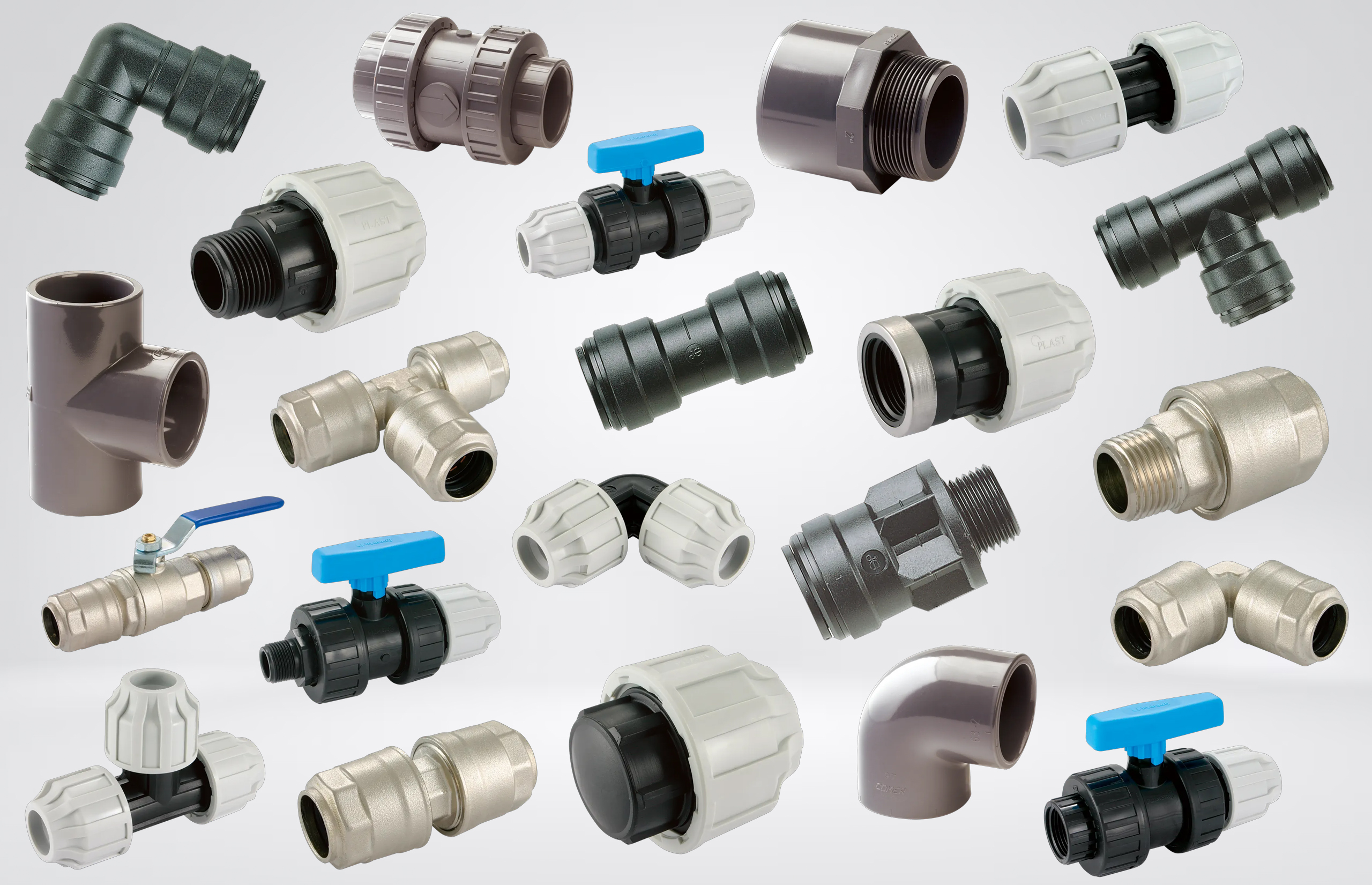
Modern fittings are designed to provide secure, leak-free connections without the need for complex installation processes. Push-fit and compression fittings reduce the risk of leaks compared to threaded alternatives.
Drop lines should also be positioned correctly to prevent contamination and ensure efficient delivery to equipment.
Valves, Isolation Points, and Take-Off Units
Isolation points allow sections of the system to be shut off for maintenance without affecting the entire network. This is critical in reducing downtime during repairs or modifications.
Take-off units should be strategically placed to ensure easy access and efficient operation.
For a full overview of available components, explore the complete range: Ring Main Systems
Take Control of System Performance Before It Becomes a Cost Issue
Outdated pipework does not fail all at once. It gradually reduces system efficiency, increases energy costs, and creates reliability issues that impact production.
Upgrading to a modern ring main system addresses these problems at their source, improving flow, reducing pressure loss, and supporting consistent performance across your operation.
If your system is struggling with leaks, pressure drops, or increasing demand, now is the time to act. Delaying the upgrade often results in higher running costs and avoidable downtime.
Explore the available solutions:
Aluminium ring main systems for high-performance industrial use
Plastic ring main fittings for lightweight and cost-effective installs
Complete system components for full upgrades
For support with specification or to discuss your application:
Email: [email protected]
Phone: 0333 6000 501