


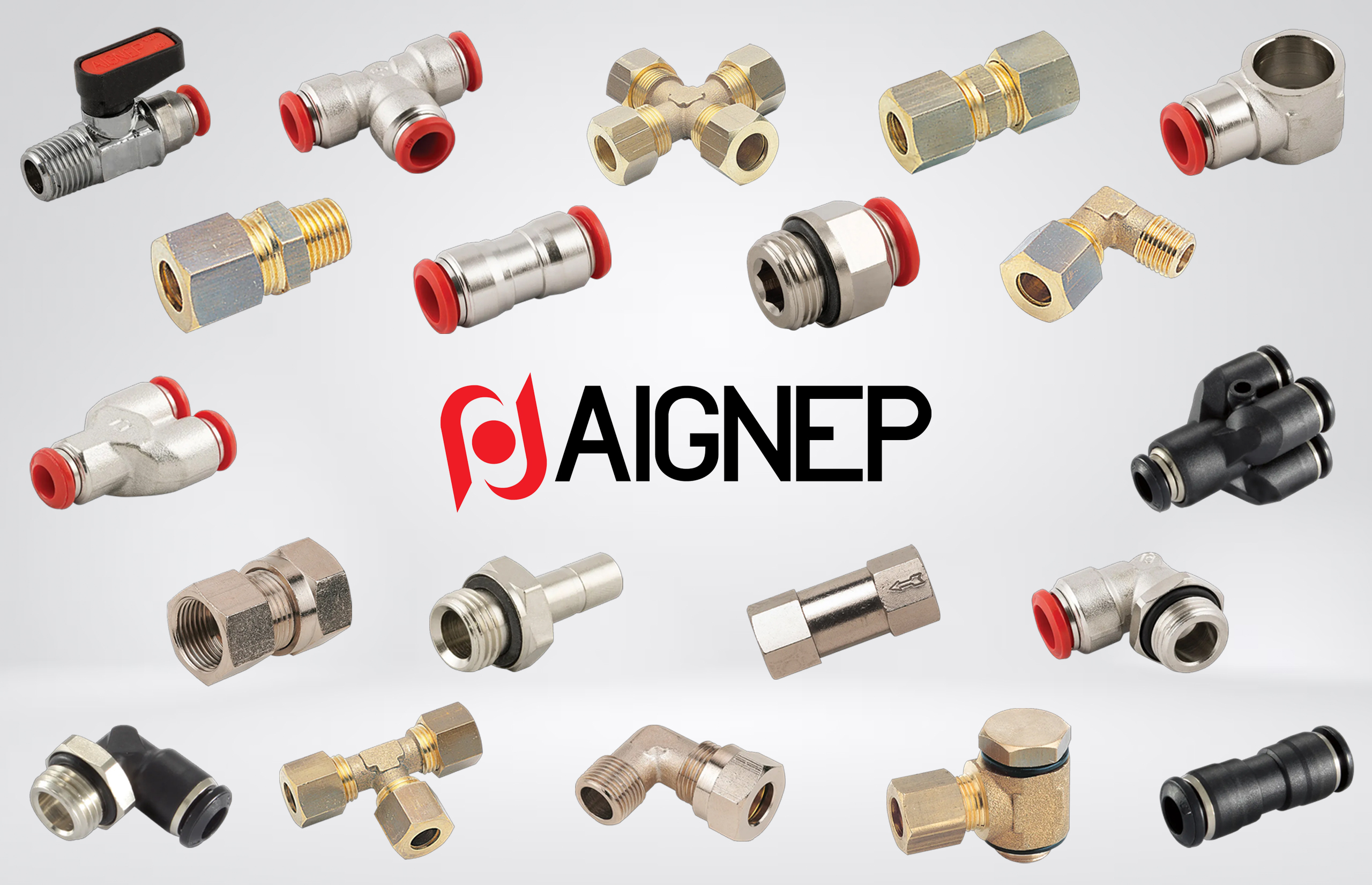
Pneumatic systems are often judged on speed and efficiency, but in practice, reliability is what keeps production running. A poorly specified fitting rarely fails immediately. Instead, it creates gradual issues such as pressure loss, intermittent faults, or repeated maintenance callouts. Over time, these small problems become costly.
Aignep pneumatic fittings are widely specified in industrial environments where consistency matters. Whether you are building a new system or replacing unreliable components, understanding how and where these fittings perform makes the difference between a stable system and one that continually causes issues.
Why Pneumatic Fitting Reliability Matters in Industrial Systems
Pneumatic fittings are a small part of the system, but they sit at every connection point. When they fail, the entire system is affected. Engineers often focus on compressors and actuators, but the connections between them are where most real-world problems begin.
The Hidden Cost of Air Leaks and Pressure Loss
Air leaks are one of the most common and most overlooked issues in pneumatic systems. Even a minor leak at a fitting can lead to a noticeable pressure drop across the system, reducing actuator performance and slowing down production cycles. In high-demand environments, this often leads to operators increasing system pressure to compensate, which increases energy consumption and accelerates wear elsewhere.
Over time, what starts as a minor inefficiency becomes a measurable cost. Energy usage rises, compressors run harder, and maintenance teams spend more time chasing leaks rather than preventing them.
What Sets Aignep Pneumatic Fittings Apart
Not all pneumatic fittings are manufactured to the same standard. Differences in material quality, sealing design, and tolerances all affect how a fitting performs over time. Aignep fittings are designed with consistency in mind, particularly in applications where repeat performance is critical.
Precision Manufacturing and Material Consistency
One of the main causes of failure in lower-quality fittings is inconsistency. Variations in thread quality, internal diameters, or sealing surfaces can lead to poor connections and unreliable performance.
Aignep fittings are manufactured with tight tolerances, which ensure consistent sealing and reliable installation. This becomes particularly important in systems with large numbers of connections, where small inconsistencies quickly multiply into larger issues.
Reliable Sealing Performance Under Varying Conditions
Pneumatic systems do not operate in controlled lab environments. Temperature changes, vibration, and varying pressure loads all affect how fittings perform.
Aignep fittings are designed to maintain sealing integrity across these changing conditions. This reduces the likelihood of gradual leaks developing over time, which is a common issue with lower-grade components.
Designed for Repeat Installation and Maintenance Cycles
In many industrial environments, fittings are not installed once and left alone. Systems are modified, upgraded, or repaired regularly. Each time a fitting is reused, there is potential for damage or reduced performance.
Aignep components are built to withstand repeated installation cycles without degrading sealing performance. This makes them particularly useful in maintenance-heavy environments where flexibility is required.
Understanding the Aignep Product Range
Aignep is not limited to a single type of fitting. The range covers multiple connection types and pneumatic components, allowing engineers to specify solutions based on application requirements rather than availability.
Push-In Fittings for Fast, Secure Connections
Push-in fittings are widely used in modern pneumatic systems due to their speed and ease of installation. They allow tubing to be connected quickly without tools, which is particularly useful in production environments where downtime must be minimised.
Aignep push-in fittings are designed with strong tube retention and reliable sealing, reducing the risk of tube blow-off under pressure. They are commonly used in automated systems, assembly lines, and equipment where frequent changes or maintenance are required.
Threaded Fittings for Higher Load and Vibration Resistance
Threaded fittings are often preferred in more demanding applications where vibration, movement, or higher pressures are present. Unlike push-in fittings, they provide a more rigid connection that is less likely to loosen over time.
In older systems or heavy-duty applications, threaded Aignep fittings offer a dependable solution where push-in options may not be suitable. They are particularly common in transport, plant machinery, and fixed installations.
Flow Control and Pneumatic Valves
Beyond fittings, Aignep also offers pneumatic valves and flow control components that play a key role in system performance. These components regulate airflow, control actuator speed, and improve overall efficiency.
Poorly specified valves can restrict airflow or create inconsistent operation. Integrating quality components ensures that the system performs as expected under varying loads.
Tubing Compatibility and System Matching
Fittings are only as effective as the tubing they connect. Incorrect tube sizing or incompatible materials can lead to leaks, poor grip, or premature failure.
Aignep fittings are designed to work with a range of pneumatic tubing, but the correct matching of outer diameter, material type, and pressure rating remains essential. Ensuring compatibility at this stage prevents issues later in operation.
Supporting New Installations and System Upgrades
Aignep fittings are used in both new system builds and upgrades to existing installations. Each scenario presents different challenges and opportunities for improving reliability.
Specifying Components for New Pneumatic Systems
In new installations, there is an opportunity to specify components correctly from the outset. This reduces the likelihood of future issues and creates a more efficient system.
Selecting high-quality fittings as part of the initial design helps avoid costly changes later.
Upgrading Existing Systems to Reduce Failures
Many systems are upgraded after repeated failures or ongoing maintenance issues. Replacing low-quality or incorrectly specified fittings with reliable alternatives can significantly improve performance.
This approach often reduces maintenance frequency and improves overall system stability.
Standardising Components Across Equipment
Using a consistent range of fittings across multiple systems simplifies maintenance and reduces the need for multiple spare parts.
Standardisation also makes it easier for maintenance teams to identify and replace components quickly.
Improve System Reliability Before Failures Occur
Most pneumatic system issues are preventable. Poor fitting selection leads to leaks, pressure loss, and unexpected downtime, all of which impact productivity and cost.
Specifying the right components from the outset, or upgrading existing systems with proven alternatives, is one of the simplest ways to improve reliability and performance.
If you are reviewing your system or dealing with repeated issues, it is worth exploring the full Aignep range of pneumatic fittings and components.
This includes push-in fittings, threaded fittings, valves, and supporting pneumatic components designed for industrial use.
For help selecting the right components or troubleshooting an existing system, speak to the expert team directly:
Email: [email protected]
Phone: 0333 6000 501