


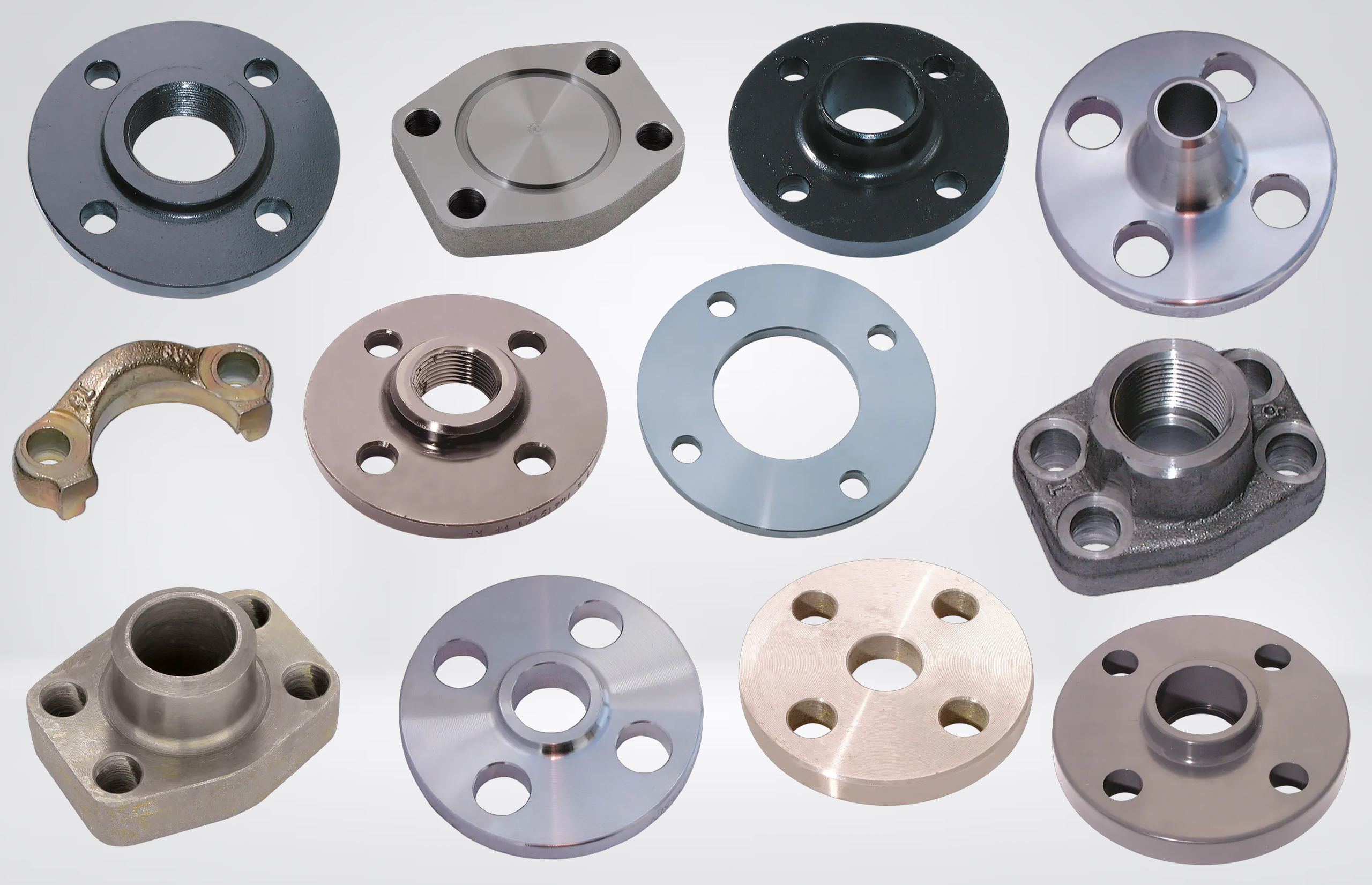
Few things are more frustrating than ordering a replacement flange, waiting for it to arrive, then discovering it won’t fit the equipment you’re trying to repair.
The pipe size looks correct. The pressure rating appears close enough. The flange itself even looks almost identical to the one you’ve removed.
Then you offer it up to the pipework and realise the bolt holes don’t line up.
It’s a situation that catches out engineers, maintenance teams and buyers more often than you might think. Not because the parts are poor quality, but because industrial equipment around the world has been built to different flange standards for decades.
ANSI and DIN are two of the most common standards you’ll encounter. They both serve the same basic purpose, but they were developed in different regions and to different specifications. As a result, they aren’t directly interchangeable.
Understanding the differences can save a lot of time when sourcing replacement components and can help avoid the downtime that often follows ordering the wrong part.
Why Do Different Flange Standards Exist?
It’s easy to look at a flange and wonder why the industry didn’t simply settle on one universal standard years ago.
The answer is largely down to history.
Most engineering standards were created long before today’s global supply chains existed. Manufacturers developed standards that suited their local industries and markets. Once equipment was designed around those standards, they became embedded in factories, processing plants and infrastructure projects around the world.
Changing an established standard isn’t a simple exercise. Equipment manufacturers would need to redesign products, update documentation and requalify systems. For that reason, many standards developed decades ago are still heavily used today.
The Physical Differences Between ANSI and DIN Flanges
The biggest mistake people make when identifying flanges is relying on appearance.
From a distance, most flanges look broadly the same. They’re round, have bolt holes around the outside and a sealing face in the centre. It’s only when you start measuring them that the differences become obvious.
Bolt circle diameters, bolt hole spacing, flange thicknesses and sealing face designs can all vary between standards. Two flanges may appear almost identical on the workshop bench but still be completely incompatible once you try to install them.
A common example is when someone compares an ANSI flange with a DIN equivalent. The nominal pipe size may be similar and the application may be identical, but the dimensional standards behind them are completely different.
The pressure classifications differ too. ANSI uses pressure classes such as Class 150, 300 and 600, while DIN systems typically use PN ratings such as PN10, PN16, PN25 and PN40.
People occasionally assume that because a Class 150 ANSI flange and a PN16 flange operate in a similar pressure range, they must be interchangeable. Unfortunately, that’s not how flange standards work.
A good example is the 150lb ANSI B16.5 weld neck forged steel flange. It’s designed to ANSI dimensions and pressure classifications, so while it may perform a similar role to a PN16 flange in an industrial pipework system, the physical dimensions are different.
Understanding Where ANSI and DIN Flanges are Used
While the dimensional differences are important, it’s equally useful to understand where each standard is commonly found.
That context often provides valuable clues when you’re trying to identify an unknown flange.
ANSI Flanges
ANSI flanges are particularly common on equipment that originated in North America or has been designed around international industrial standards heavily influenced by American specifications.
You’ll frequently find them in oil and gas facilities, chemical processing plants, power generation sites and large-scale manufacturing operations. Imported pumps, valves and process equipment often use ANSI connections too.
One reason ANSI remains popular is the range of pressure classes available. The standard provides engineers with a structured approach to specifying components for different operating conditions, from relatively modest duties through to demanding industrial applications.
Weld neck designs are especially common. The 150lb ANSI B16.5 weld neck forged steel flange is a good example of the type of flange regularly used where long-term reliability and strength are priorities.
Many ANSI systems remain in service for decades. In fact, the challenge is rarely the flange itself. The challenge is identifying the specification years later when replacement parts are required.
DIN Flanges
DIN flanges are widely associated with European-built machinery and industrial equipment.
If you’re working on German production equipment, European processing systems or imported industrial machinery, there’s a good chance you’ll encounter DIN standards somewhere within the installation.
PN16 is probably the designation most engineers see regularly. It’s used extensively across utility systems, water services and general industrial pipework because it offers a practical balance between performance, availability and cost.
Forged steel PN16 galvanised flanges are a common sight on these types of systems, particularly where some additional protection against corrosion is beneficial.
One thing worth remembering is that PN16 only identifies the pressure rating. It doesn’t guarantee that every PN16 flange shares identical dimensions or specifications, which is why measurements still matter.
How to Identify an Unknown Flange
The bolt circle diameter is the best place to start. It quickly rules standards in or out and helps narrow the search considerably.
From there, look at the number of bolt holes, flange outside diameter, flange thickness and bore size. Taken together, these measurements normally provide enough information to identify the standard with a reasonable degree of confidence.
It’s surprising how often the answer is hidden in plain sight as well. Pressure ratings, material grades and manufacturer markings are frequently stamped onto the flange itself. The challenge is finding them beneath years of paint, corrosion or general industrial grime.
Beyond the Standard: What Else Needs Checking?
Identifying the correct standard is only part of the specification process.
A flange can match perfectly on dimensions and still be the wrong choice for the application.
Pressure, temperature, vibration levels and the media being handled all influence what type of flange should be installed. Two components may bolt together without issue, but that doesn’t necessarily mean they’ll deliver the same service life.
This becomes particularly important on older systems where operating conditions may have changed over the years. Equipment that was originally installed indoors may now be exposed to the elements. A process line may be handling different media than it did when first commissioned.
Those changes can have a significant impact on material selection.
For many industrial applications, carbon steel remains the most practical choice. It’s strong, widely available and cost-effective. Where additional protection is required, forged steel PN16 galvanised flanges are often used to help resist corrosion in damp or exposed environments.
In more aggressive conditions, stainless steel becomes a sensible investment. Food processing, chemical applications, marine environments and washdown areas are all examples where corrosion resistance can be critical. In these situations, a 316 stainless steel PN16 weld flange will often provide a much longer service life than a standard carbon steel alternative.
It’s one of those areas where the cheapest option isn’t always the most economical. The cost difference between flange materials is often small compared to the cost of an unexpected shutdown or emergency replacement.
Ultimately, selecting the right flange means looking at the complete picture. Standard, dimensions, pressure rating and material all need to work together if the system is going to perform reliably over the long term.
Getting the Specification Right First Time
Most flange issues don’t start because the flange failed.
They start because the wrong replacement was identified.
That’s why taking a few extra minutes to confirm the specification is so important.
Measure the flange properly. Check for pressure ratings and markings. Consider the operating conditions. If there’s any doubt, compare the dimensions against the relevant standard before ordering.
Whether you’re replacing an ANSI weld neck flange on a process system, a PN16 galvanised flange on a utility line or a stainless steel flange in a corrosive environment, the same principle applies. Identify first, order second.
ANSI and DIN standards both have their place in industry. Neither of them are inherently better than the other. The important thing is making sure the replacement matches the system you’re working on.
If you’re sourcing replacement flanges, reviewing an existing installation or trying to identify an unknown connection, a little time spent verifying the details now can prevent unnecessary delays, additional costs and the frustration of finding out a new flange doesn’t fit when the job is ready to go back together.
If you’re struggling or need some additional help don’t hesitate to reach out to the expert team who can cross reference your flange details and the application itself to ensure you get the right flange for the job.
Email: [email protected]
Phone: 0333 6000 501