


Choosing an oil hose sounds straightforward until you start looking at why hoses actually fail.
Most people begin with pressure. They check the working pressure of the system, find a hose with a suitable rating and assume the job is done.
Sometimes it is.
But if you’ve spent any time around hydraulic systems, lubrication equipment or industrial oil transfer applications, you’ll know that hoses rarely fail because of one specification being wrong. More often it’s a combination of factors. A little vibration here, some abrasion there, perhaps a bend radius that’s tighter than it should be.
The result is usually the same. The hose doesn’t last as long as expected and somebody ends up replacing it long before they should have to.
The good news is that most of these problems can be avoided if the hose is selected with the real application in mind rather than just the pressure rating.
Why Oil Hose Selection Matters
Most hoses only get attention when something goes wrong.
Until then, they’re just part of the machine. Hidden behind guarding, routed along a chassis or tucked into a hydraulic system where nobody really thinks about them.
The problem is that a failed hose rarely creates a minor inconvenience.
A burst oil hose can stop production, contaminate equipment, create environmental issues and leave maintenance teams searching for a replacement while a machine sits idle. The cost of the hose itself is often insignificant compared to the cost of the downtime.
What’s interesting is how often recurring hose failures become accepted as normal.
A hose gets replaced every year or two, everyone assumes that’s just its lifespan and the cycle continues. In reality, the hose may never have been particularly well suited to the application in the first place.
We’ve seen hoses fail because they were exposed to constant vibration. Others because they were rubbing against machine frames. Some because they were simply the wrong type of hose for the job.
That’s why experienced engineers tend to spend more time understanding the application than comparing specifications.
The application usually tells you far more than the datasheet ever will.
Start With the Application, Not the Hose
One of the most common mistakes is looking for a hose before fully understanding the job it’s expected to do.
Not all oil applications are the same.
Moving oil between tanks, supplying lubrication systems and operating hydraulic equipment all place very different demands on a hose. The fluid may be similar, but the working conditions often aren’t.
This is where purpose-designed products become important.
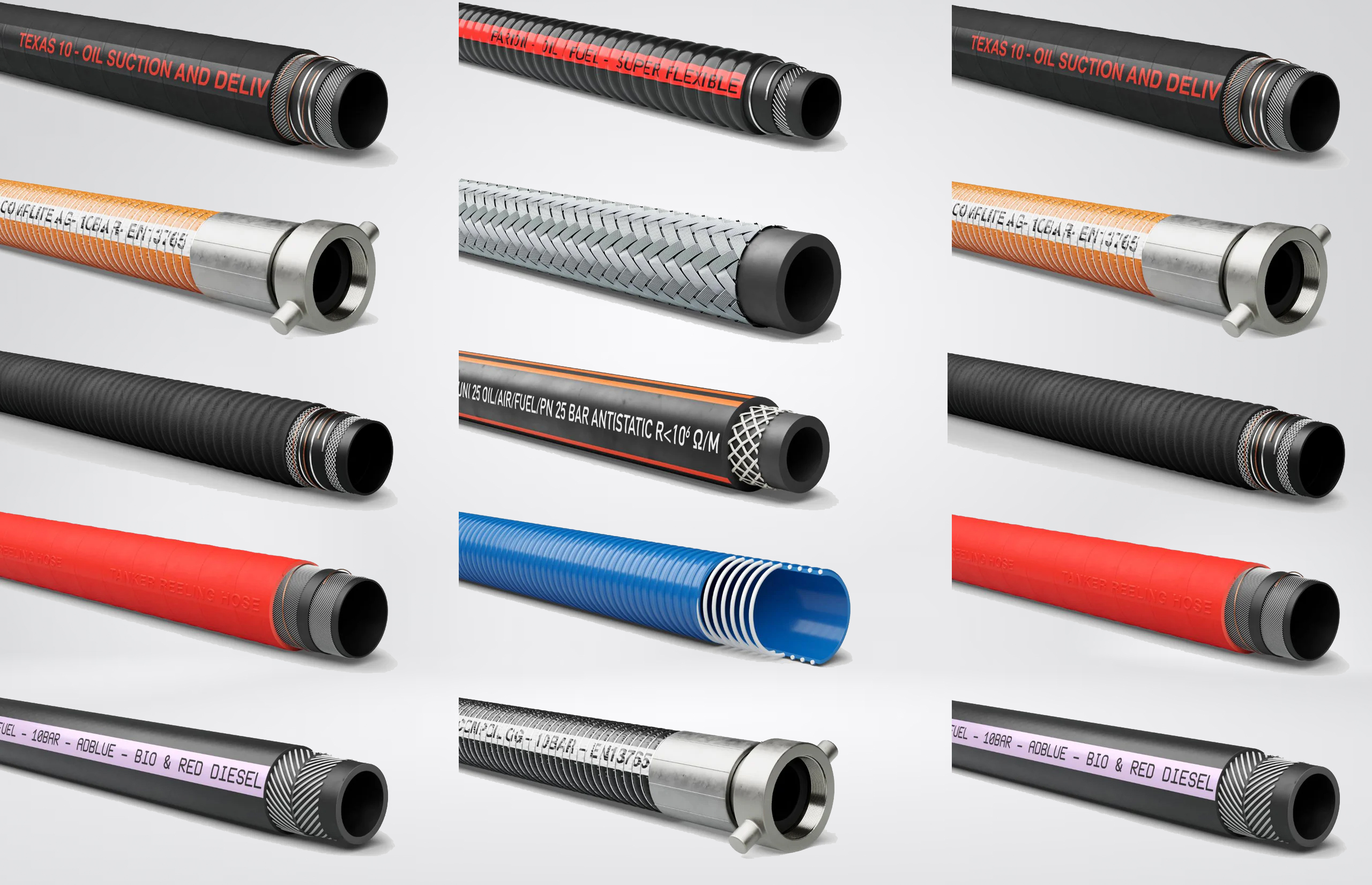
For example, if the main requirement is transferring oil rather than handling hydraulic pressure, a dedicated oil suction and delivery hose is often the better choice. These hoses are designed specifically for moving oil efficiently while also coping with suction conditions that many standard hoses aren’t intended for.
The environment deserves just as much attention.
A hose installed inside a clean factory generally has a much easier life than one fitted to agricultural machinery or construction equipment. Dirt, weather, vibration and accidental impacts all contribute to wear over time.
Heat is another factor that’s easy to underestimate.
A hose running close to an engine, hydraulic power unit or other heat source may age significantly faster than the same hose operating in a cooler environment. Everything can look fine during installation but a few years later the difference becomes obvious.
That’s why good hose selection starts with questions rather than products.
What fluid is being carried? How does the equipment operate? Is there movement, vibration or heat involved?
Once those answers are clear, choosing the right hose becomes far easier.
Pressure Ratings Tell Part of the Story
Pressure is important. Nobody would argue otherwise.
The mistake is assuming that operating pressure tells the whole story.
Machines rarely work in perfectly stable conditions. Pumps cycle, valves switch, cylinders reach the end of their stroke and systems start and stop throughout the day. All of these events can create pressure fluctuations that the hose experiences even if they aren’t obvious to the operator.
The machine operator may never know those pressure spikes happened. The hose certainly does.
Over time, repeated pressure cycling can have a significant impact on hose life. That’s one reason why two identical machines operating at the same pressure can produce very different reliability results.
The way the pressure behaves often matters just as much as the maximum figure itself.
For lower-pressure hydraulic circuits, return lines and lubrication systems, flexibility frequently becomes part of the decision as well. SAE 100R6 hydraulic hose is commonly used in these applications because it provides suitable pressure performance while remaining easier to route than some heavier hose constructions.
It’s tempting to think that specifying a higher-rated hose automatically improves reliability.
Sometimes it does.
Other times it simply creates a stiffer hose that’s harder to install correctly. If that leads to tight bends or additional strain on fittings, any advantage gained from the higher pressure rating can quickly disappear.
That’s why pressure should always be considered alongside the rest of the application rather than viewed in isolation.
Getting the Specification Right Before Problems Start
Choosing an oil hose shouldn’t be about finding the highest pressure rating available or simply ordering whatever was fitted last time.
The goal is to select a hose that matches the demands of the application and continues performing reliably long after installation.
Whether you’re specifying a hose for hydraulic systems, lubrication equipment or oil transfer duties, taking the time to consider pressure, flexibility and operating conditions together will almost always lead to a better outcome.
If a hose is being replaced more frequently than expected, it’s often worth stepping back and reviewing the application rather than automatically ordering the same replacement again. Many recurring hose issues can be traced back to the original specification rather than the quality of the hose itself.
And if you’re unsure which option is most suitable, speak to one of the expert team at Hoses Direct before ordering to ensure the hose you’ve picked out is the right specification for your application, a quick conversation at the beginning of the process is far easier than dealing with the downtime and disruption that comes from getting it wrong later.
From oil suction and delivery hose through to flexible hydraulic and specialist industrial hose options, choosing the right product at the outset is one of the simplest ways to improve reliability and reduce unnecessary maintenance costs over the long term.
Email: [email protected]
Phone: 0333 6000 501