


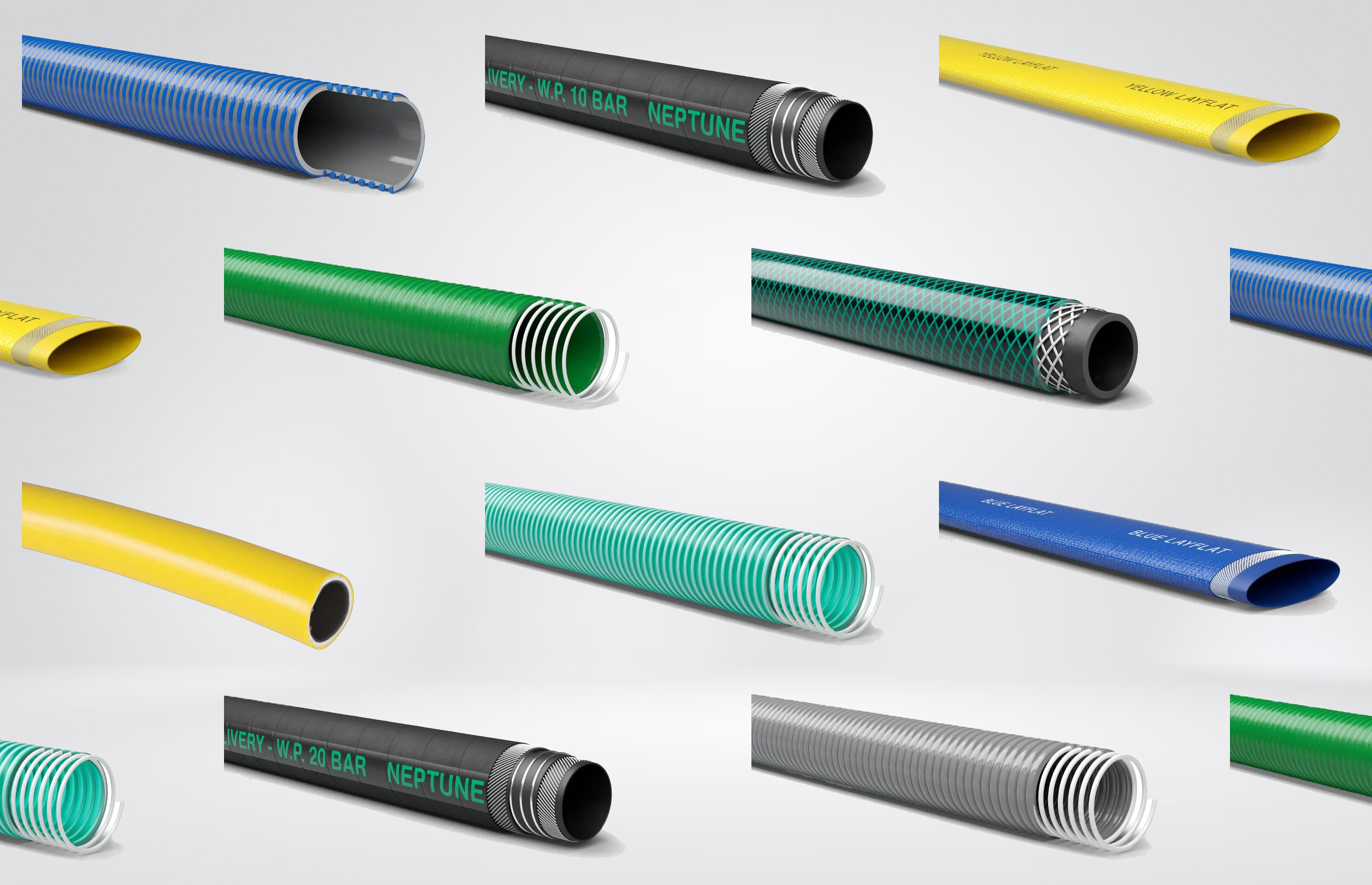
Water transfer is one of those site activities that rarely gets much attention until something goes wrong. A collapsed hose, a split wall, or a poorly matched discharge line can stop pumps dead, flood work areas, and cause avoidable downtime. In construction, utilities, and plant environments, water hoses are expected to cope with rough handling, variable flow rates, and less-than-ideal ground conditions.
Understanding Water Transfer Systems in Industrial Environments
Before selecting a hose, it is important to understand how water is actually moved around site environments. Most failures occur not because the hose is defective, but because it has been asked to do a job it was never designed for.
Water transfer systems in industrial settings generally involve pumps operating under variable conditions, often switching between suction and discharge duties depending on the task. The hose must cope with these changes without deforming, leaking, or degrading prematurely.
Common Water Transfer Scenarios Across Industries
Water hoses are used for a wide range of tasks. Dewatering excavations and trenches is one of the most common, often involving continuous suction from standing water. Temporary bypass systems for utilities maintenance also rely on hoses that can run for extended periods without failure. In plant settings, hoses are regularly used for tank emptying, washdown, and non-potable water movement between processes.
These applications place different stresses on a hose. Some demand high resistance to vacuum collapse, while others prioritise pressure handling or ease of deployment. Understanding the scenario is the first step in choosing correctly.
Suction vs Delivery: How Water Hoses Actually Work in Practice
Suction and delivery duties place very different demands on a hose. During suction, the hose is subjected to negative pressure as the pump draws water in. If the hose wall or reinforcement is insufficient, it will flatten or collapse, restricting flow or stopping it altogether.
Delivery applications, by contrast, involve positive pressure as water is pushed through the hose. Here, the focus shifts to pressure rating, wall strength, and resistance to bursting. Some hoses are designed to handle both roles, while others are only suitable for discharge. Using a delivery-only hose on suction is a common and costly mistake.
Key Factors That Determine the Correct Water Hose Specification
Once the system and application are understood, hose selection should be driven by specification rather than convenience. Short-term fixes often lead to repeat failures and higher long-term costs.
Pressure Rating and Flow Requirements
Pressure rating is not just about matching the pump’s maximum output. Real-world systems experience pressure spikes, especially during start-up, shutdown, or when valves are closed quickly. A hose with insufficient headroom may survive initially but fail prematurely.
Flow rate also matters. Higher flow increases internal velocity, which can accelerate wear and place additional stress on the hose wall and reinforcement. Selecting a hose with adequate pressure capacity and bore size helps maintain stable flow and reduce strain on the system.
Hose Construction and Reinforcement
Construction plays a major role in how a hose behaves under load. Medium-duty water hoses typically use spiral or textile reinforcement to resist collapse and pressure. The type and density of reinforcement affect flexibility, weight, and durability.
Thicker walls and stronger reinforcement improve collapse resistance but can make hoses harder to handle. Lighter constructions are easier to deploy but may not survive continuous or demanding duties. Balancing these factors is essential.
Flexibility, Handling, and Deployment Conditions
On active sites, hoses are rarely laid out neatly. They are dragged over uneven ground, routed around obstacles, and repositioned frequently. A hose that is too stiff can slow installation and increase the risk of kinking, while overly soft hoses may deform under load.
Flexibility becomes especially important in confined spaces or where hoses must be coiled and stored regularly. In these cases, elastic or highly flexible constructions can significantly reduce handling time and operator fatigue.
Environmental and Site Conditions
Water hoses used outdoors are exposed to abrasion, UV light, temperature fluctuations, and sometimes contaminated water. Rough ground can wear through hose walls quickly, while prolonged UV exposure can harden or crack certain materials.
Considering these conditions at the specification stage helps prevent early failure and unexpected replacements.
Choosing the Right Hose Type for Your Application
Different hose types are designed to solve different problems. Selecting the correct category first makes it much easier to narrow down the right product.
Medium-Duty Water Suction and Delivery Hoses
Medium-duty suction and delivery hoses are widely used because they offer versatility. They are designed to handle both vacuum and pressure, making them suitable for applications where a single hose may be used for multiple tasks.
10 Bar Water Suction and Delivery Hose
A 10 bar water suction and delivery hose is commonly used on construction and plant sites where reliability is critical. The pressure rating provides a comfortable safety margin for most water transfer pumps, while the reinforced construction resists collapse during suction.
These hoses are often selected for dewatering, tank emptying, and general site water movement where the hose may alternate between suction and discharge roles without being changed.
Green Medium Duty Suction Delivery Hose
Green medium-duty suction delivery hoses are frequently chosen for their balance of durability and handling. The construction is suitable for regular site use without the excessive stiffness associated with heavier industrial hoses.
The colour also improves visibility on busy sites, reducing trip hazards and making hose routing easier to manage around plant and equipment.
Super Elastic Medium Duty Suction and Delivery Hose
Super elastic suction and delivery hoses are designed for applications where flexibility is a priority. Their elastic construction allows tighter bend radii and easier routing through confined spaces.
These hoses are particularly useful in temporary installations or mobile pumping setups, where speed of deployment and ease of handling can make a significant difference to productivity.
Layflat Hoses for Water Discharge and Temporary Transfer
Layflat hoses are a different category altogether. They are designed for discharge only and should never be used on suction. When not pressurised, they lie flat, making them easy to transport and store.
Blue Layflat Hose for Temporary Water Movement
Blue layflat hoses are commonly used for temporary water discharge, such as pumping water away from excavations or diverting flow during maintenance work. When pressurised, they expand to full bore, allowing efficient water transfer over distance.
Their lightweight construction makes them ideal where hoses need to be moved frequently or stored in limited space. However, they rely on system pressure to maintain shape and are unsuitable for vacuum conditions.
Speak to The Technical Team at Hoses Direct Before You Order
If you are unsure which hose best suits your application, a short conversation about pump type, suction depth, operating pressure, duty cycle, and site conditions with our expert team can prevent premature hose failure and unplanned downtime.
For technical advice and specification support, contact us on the below.
Call: 0333 6000 501
Email: [email protected]
Expert guidance that helps you select the right suction, delivery, or layflat hose for reliable, long-term performance.