


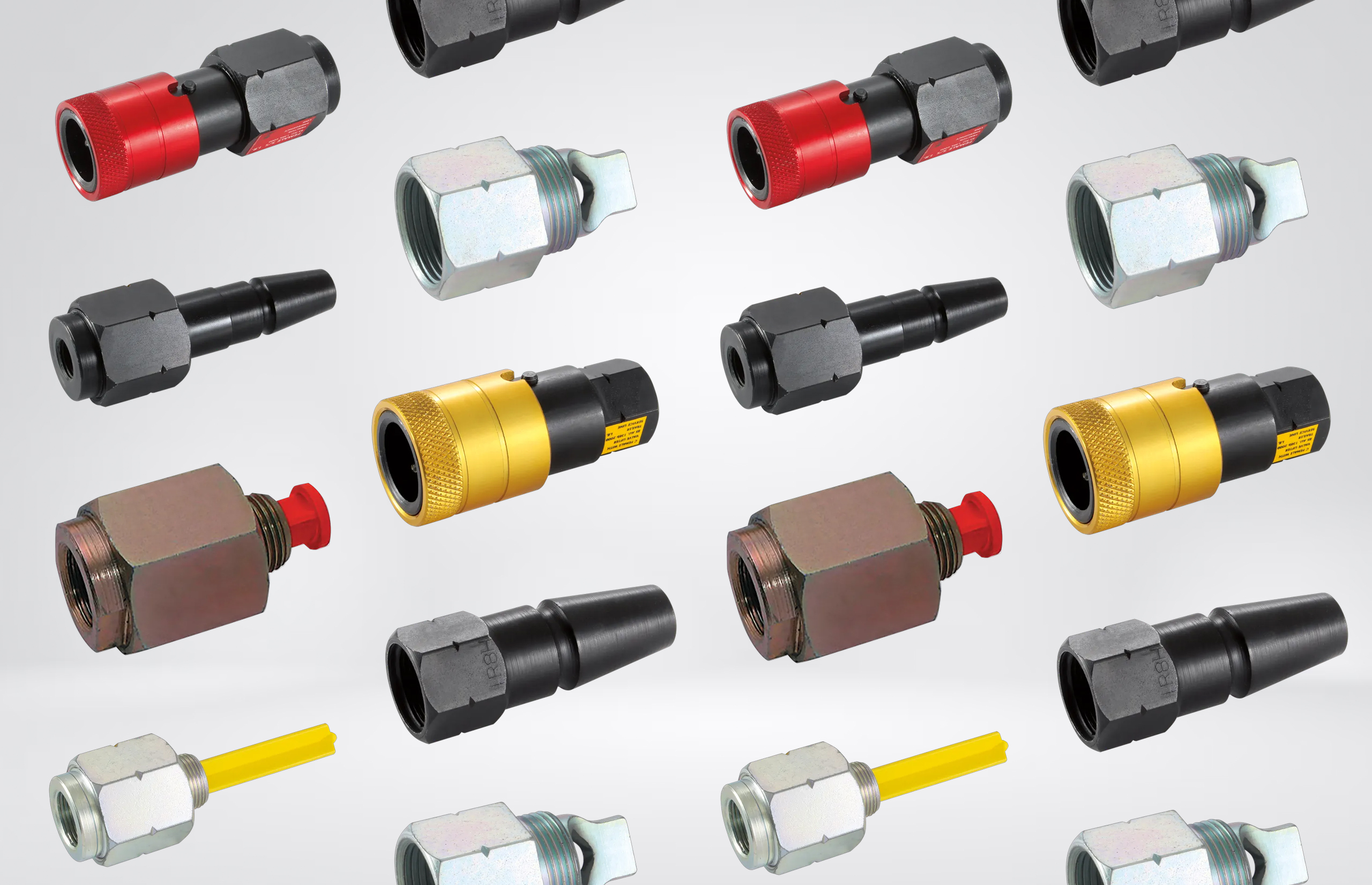
Air brake couplings are a fundamental part of any commercial vehicle braking system. When a tractor unit connects to a trailer, these couplings create the sealed connection that allows compressed air to travel between both vehicles. If that connection is unreliable, braking performance is immediately affected.
For fleet engineers, transport operators, and maintenance teams, air brake couplings are not just another fitting. They are safety-critical components that must withstand vibration, weather exposure, frequent connection cycles, and heavy daily use. Even a small leak or worn valve can lead to pressure loss, delayed braking response, or compliance issues during inspections.
This guide explains how service and emergency air brake couplings work, the standards they follow, and what engineers should look for when specifying replacements or upgrading components in their braking systems.
Understanding Air Brake Coupling Systems
Before looking at individual couplings, it helps to understand where they sit within the wider braking system. Air brake couplings form the interface between the tractor unit and the trailer, allowing compressed air to flow through dedicated lines that control braking behaviour.
When properly specified and maintained, these couplings provide a reliable connection that supports consistent braking performance across thousands of connection cycles.
How Air Brake Systems Work on Commercial Vehicles
Heavy goods vehicles rely on compressed air rather than hydraulic fluid to operate braking systems. An onboard compressor generates pressurised air, which is stored in reservoirs before being distributed through air lines to various braking components.
When the driver applies the brake pedal, a control valve releases compressed air that activates braking chambers on both the tractor unit and trailer. This system allows large vehicles to maintain consistent braking force even under heavy loads.
Because trailers are detachable, the air supply must be connected and disconnected regularly. This is where air brake couplings play their role, forming the secure connection point between tractor and trailer air lines.
The Connection Between Tractor Units and Trailers
Two air lines typically connect a tractor unit to a trailer. Each line uses a dedicated coupling designed to handle specific pressure conditions and operational roles.
These couplings must maintain an airtight seal while remaining easy to connect during vehicle changeovers. Drivers and maintenance teams rely on them to perform consistently in demanding environments such as construction sites, waste facilities, and long-distance haulage operations.
A poorly sealing coupling can quickly cause pressure loss across the braking system, which is why specification and build quality are so important.
UK Standards for Air Brake Couplings
Many commercial vehicle air brake couplings in the UK are manufactured to BS AU138B:2000, which standardises dimensions and compatibility across different vehicles.
This ensures that tractor units and trailers from different manufacturers can connect safely without mismatched fittings. Using components manufactured to recognised standards reduces compatibility issues and improves long-term reliability.
Service vs Emergency Air Brake Couplings
Although both couplings are used together in the same system, they perform very different functions. Understanding the role of each helps engineers identify faults more quickly and specify the correct replacement components.
Each coupling manages a separate air line with a distinct role in the braking process.
Service Couplings and Their Role in Braking Control
The service coupling connects the service line between the tractor unit and trailer. This line transmits braking commands from the driver’s foot valve to the trailer brakes.
When the brake pedal is pressed, air pressure travels through the service line to activate the trailer braking chambers proportionally. The harder the pedal is pressed, the more air pressure is delivered.
Lift valve mechanisms help maintain system integrity by controlling airflow during connection and disconnection. This reduces the chance of air escaping or contaminants entering the system when couplings are not fully engaged.
Emergency Couplings and the Fail-Safe System
The emergency coupling connects the supply line that delivers compressed air to the trailer reservoirs. This line keeps the trailer braking system pressurised and ready for operation.
If the emergency line becomes disconnected or pressure drops significantly, the trailer braking system automatically activates. This fail-safe function is designed to prevent uncontrolled trailer movement if the connection between tractor and trailer fails.
Emergency couplings are therefore critical to both braking performance and vehicle safety.
Why Both Lines Must Work Together
Although the service line controls braking input, the emergency line maintains the pressure required for the system to function. If either connection fails, braking performance is compromised.
For fleet maintenance teams, this means both couplings must be inspected regularly and replaced when signs of wear appear. A coupling that still connects but no longer seals perfectly can gradually cause pressure loss that affects braking efficiency.
Common Issues with Air Brake Couplings in Fleet Operations
In their working environments, air brake couplings experience heavy mechanical wear and constant environmental exposure. Over time, this can lead to several common problems that affect braking system performance.
Understanding these issues helps maintenance teams identify problems early.
Air Leaks and Pressure Loss
Air leaks are one of the most frequent faults encountered in braking systems. Worn seals, damaged threads, or slightly misaligned couplings can allow compressed air to escape gradually.
While small leaks may initially appear minor, they increase compressor workload and reduce system efficiency. Over time, this can affect braking response and increase wear across other pneumatic components.
Mixed or Incorrect Coupling Standards
Compatibility problems often arise when vehicles are fitted with non-standard couplings or components from different specification ranges.
Vehicles operating across mixed fleets or subcontractor trailers are particularly susceptible to this issue. Ensuring that couplings meet recognised standards such as BS AU138B helps prevent connection problems and simplifies maintenance.
Corrosion and Contamination
Road salt, moisture, oil residues, and debris can all affect coupling performance. Corrosion may cause components to seize or prevent proper sealing.
Maintenance teams often encounter couplings that appear mechanically sound but fail to seal correctly due to contamination within the mating surfaces.
Routine inspection and timely replacement are the most effective ways to prevent these issues from escalating into braking faults.
Choosing the Right Air Brake Couplings for Your Vehicle
Selecting the correct air brake couplings requires more than matching a thread size or connector type. Engineers must consider compatibility, durability, and long-term service conditions.
Taking time to specify correctly helps prevent repeated maintenance issues.
Compatibility with Existing Systems
Air brake components must match the existing tractor and trailer systems to ensure correct operation. This includes colour coding, valve configuration, and compliance with recognised standards.
Durability for Demanding Environments
Vehicles operating in sectors such as construction, agriculture, or waste management expose couplings to mud, water, and vibration. Components must be robust enough to withstand these conditions.
Higher-quality couplings, including stainless steel options, often provide improved corrosion resistance and longer service life in demanding environments.
Ease of Maintenance and Replacement
For fleet operators, downtime is a critical factor. Components that are easy to replace and widely available help keep vehicles on the road.
Using standardised couplings also simplifies stock management for maintenance teams responsible for large fleets.
Protect Your Air Brake System with the Right Components
Reliable braking systems depend on correctly specified couplings and properly maintained air connections. A worn or poorly sealing coupling can gradually reduce system pressure, leading to braking delays or compliance failures.
Regular inspection and proactive replacement are the most effective ways to protect both vehicle safety and operational reliability.
Air Brake Couplings Available Online
Hoses Direct supplies a comprehensive range of air brake couplings and pneumatic quick-release components suitable for commercial vehicle systems.
The range includes:
- Operating plugs for air line connections
- Male emergency couplings manufactured to BS standards
- Female service couplings with lift valve mechanisms
- Additional pneumatic coupling components compatible with heavy vehicle braking systems
Explore the full range here: https://hoses.co.uk/product-category/pneumatics/pneumatic-quick-release-couplings/air-brake-components/
Need Help Selecting the Right Couplings?
If you are unsure which air brake couplings are compatible with your vehicle or trailer system, the expert team can help you identify the correct components required.
Email: [email protected]
Phone: 0333 6000 501
Specifying the correct couplings today helps prevent pressure loss, reduce maintenance issues, and keep commercial vehicles operating safely on the road.