


Hydraulic hose failures are very rarely instant. More often, they begin with gradual external wear that goes unnoticed until reinforcement is exposed and pressure finds the weak point.
In agriculture, construction, transport, utilities and manufacturing, hydraulic hoses are frequently routed in exposed positions. They run along booms, through articulation points, across chassis rails and near moving components. Without protection, the hose cover becomes the sacrificial layer, and once that layer is compromised, failure accelerates.
That’s where hose guards come into play, they are a practical control measure that protects people, equipment and uptime.
The Real Risks Facing Exposed Hydraulic Hoses
Hydraulic systems operate under pressure, often in harsh environments. Even correctly specified hoses will degrade prematurely if external threats are not managed. Before choosing protection, it is important to understand what typically causes failure in the field.
Abrasion: The Most Common Cause of Premature Failure
Abrasion remains one of the leading causes of hydraulic hose breakdown. Continuous rubbing against steel frames, brackets, clamps or other hoses gradually removes the outer cover.
Once the protective cover wears through, the wire braid or spiral reinforcement becomes exposed. At that point, corrosion begins, and structural integrity weakens. We regularly see hoses replaced not because they were underspecified for pressure, but because abrasion was ignored.
In mobile plant and agricultural machinery, this can shorten hose life dramatically. A simple protective sleeve fitted during installation would often have doubled service intervals.
Hose Whip and High-Pressure Spray Hazards
When a pressurised hose fails, the release of stored energy can cause violent hose whip. This presents a serious injury risk, particularly on equipment operated close to personnel.
There is also the risk of hydraulic fluid spray. High-pressure injection injuries are severe and often underestimated. In addition to personal safety concerns, fluid spray can contaminate the environment and damage nearby components.
Burst containment sleeves are designed specifically to help manage this risk by containing or redirecting fluid in the event of rupture.
Impact and Crushing in Harsh Working Environments
On construction sites, farms and waste handling operations, hoses are routinely exposed to debris, tools and moving machinery. Impact damage and crushing can distort reinforcement layers even when the outer cover appears intact.
External guarding provides a sacrificial layer that absorbs this abuse before it reaches the structural elements of the hose.
Understanding these threats clarifies why protection should be considered part of the system design and not an afterthought.
Where Hose Guards Deliver the Most Value
Not every hydraulic line requires external protection. However, certain applications consistently benefit from it. Identifying these scenarios helps prioritise where guarding provides the strongest return on investment.
Mobile Plant and Construction Equipment
Excavators, telehandlers, loaders and cranes operate in abrasive and high-impact environments. Hoses routed along booms or around articulation joints are particularly vulnerable.
Repeated flexing combined with external rubbing accelerates wear. Spiral guards or abrasion sleeves are frequently specified on these exposed sections to extend hose life and reduce emergency callouts.
In fleet operations, even a small reduction in unplanned hose failures can significantly reduce downtime costs.
Agricultural Machinery
Tractors, balers, sprayers and combines often carry externally routed hydraulic lines exposed to mud, crop debris and constant vibration.
We often speak to farmers who only consider hose protection after experiencing in-season breakdowns. Retrofitting protection during winter servicing is a common and sensible strategy to prevent peak-season failure.
In agriculture, the cost of downtime during harvest frequently outweighs the cost of protective sleeves many times over.
Industrial and Manufacturing Systems
Fixed hydraulic systems are not immune to damage. Forklift traffic, metal swarf and operator access routes create impact and abrasion risks in factory environments.
In these settings, hose guards are often specified to align with internal safety policies or risk assessments, particularly where hoses run near workstations.
Protection in industrial environments is less about extreme impact and more about controlled, long-term durability and safety management.
Types of Hose Guards and Their Applications
Hose guards are not one-size-fits-all. Different designs address different risks. Selection should be based on application conditions, pressure, routing and access requirements.
Abrasion-Resistant Protective Sleeves
Abrasion sleeves provide a durable external layer designed to prevent the hose cover from wearing through.
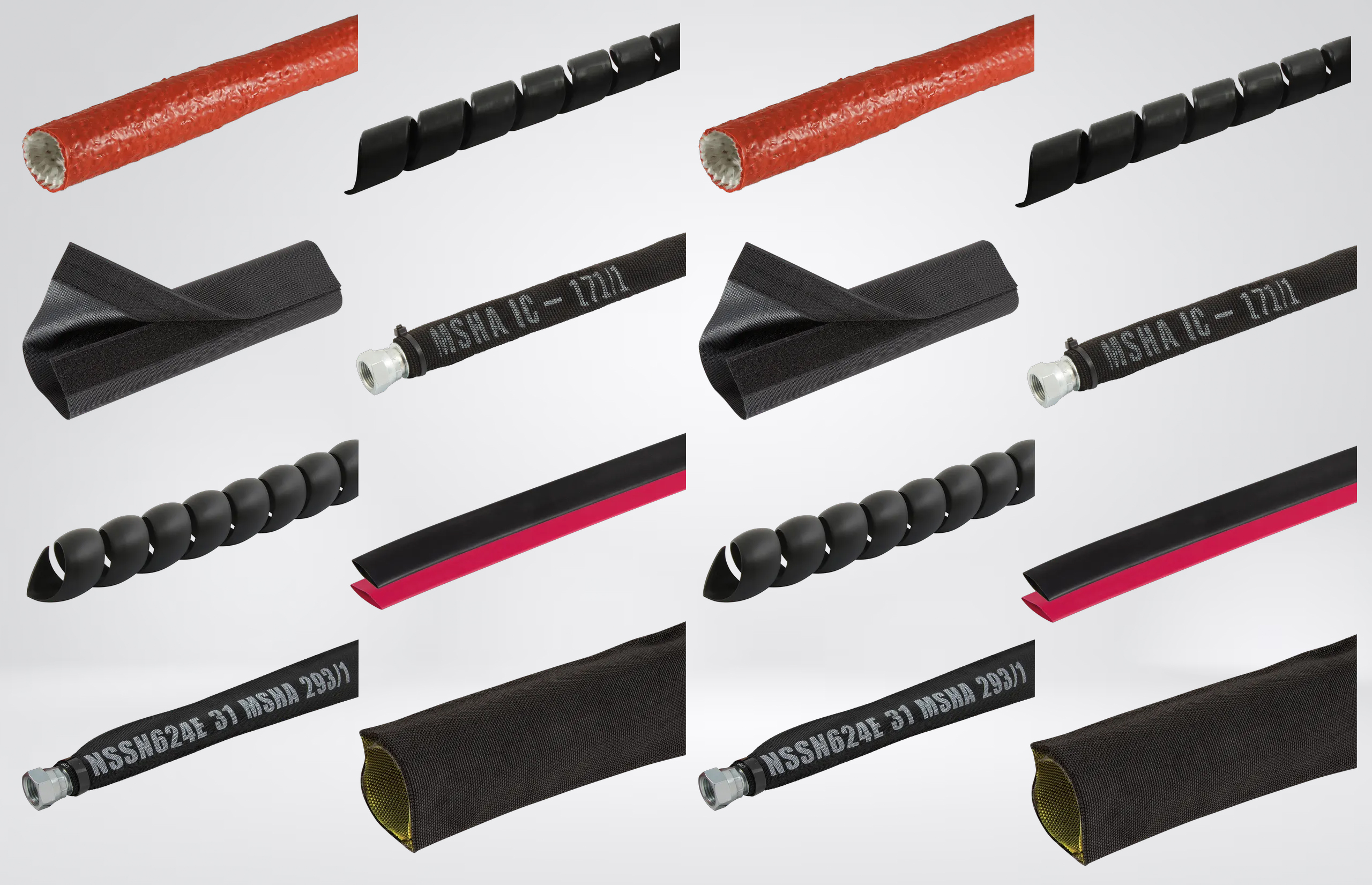
Options such as the 20 metre coils hose protection sleeve allow engineers and maintenance teams to cut to length and protect multiple hose assemblies efficiently. These sleeves are flexible, straightforward to install and well suited to general abrasion protection across plant and machinery.
They are commonly fitted during hose assembly or during scheduled maintenance to prevent known wear points from developing into failure.
Burst Guard Protective Hose Sleeves
Burst guard sleeves are designed with containment in mind. In the event of hose rupture, they help control fluid spray and reduce the severity of hose whip.
The 30 metre coils hose burst guard protective hose sleeves are often selected where hoses operate near operator cabins, access platforms or walkways. In these environments, reducing fluid injection risk becomes a priority.
These sleeves are particularly relevant in higher-pressure circuits or where duty-of-care considerations are central to specification.
Polypropylene Spiral Hose Guards
Spiral hose guards provide mechanical protection and are well suited to exposed mobile equipment.
Flat type black polypropylene spiral hose guard offers strong impact resistance while maintaining flexibility. It can be wrapped around existing hoses without full disassembly, making it ideal for retrofitting in the field.
Spiral guards also help bundle multiple hoses together, reducing cross-abrasion and keeping routing controlled.
Selecting between these options depends on whether abrasion, burst containment or impact protection is the primary concern.
Safety, Compliance and Duty of Care
Hydraulic systems carry inherent risk. The Health and Safety Executive highlights the dangers associated with high-pressure fluid systems, including injection injuries and uncontrolled release.
While regulations may not mandate hose guards in every scenario, risk assessments frequently justify their use, particularly where personnel exposure is possible.
Specifying hose protection demonstrates a proactive approach to safety management. For many organisations, it forms part of wider compliance and operational reliability strategies.
Protect Your System Before Failure Forces the Decision
Unprotected hoses will wear. In abrasive, high-impact or personnel-exposed environments, that wear will eventually lead to failure.
If your equipment operates in demanding conditions, installing the right hose guards is a practical step toward reducing risk and extending service life.
Hoses Direct supplies a broad range of protective hose sleeves and spiral guards suitable for agricultural machinery, construction plant, industrial systems and transport applications.
Whether you are retrofitting existing equipment or specifying protection for new builds, the correct guard should match your operating pressures and environmental conditions.
If you are unsure which solution fits your application, speak to the expert team today on the following:
Email: [email protected]
Phone: 0333 6000 501