


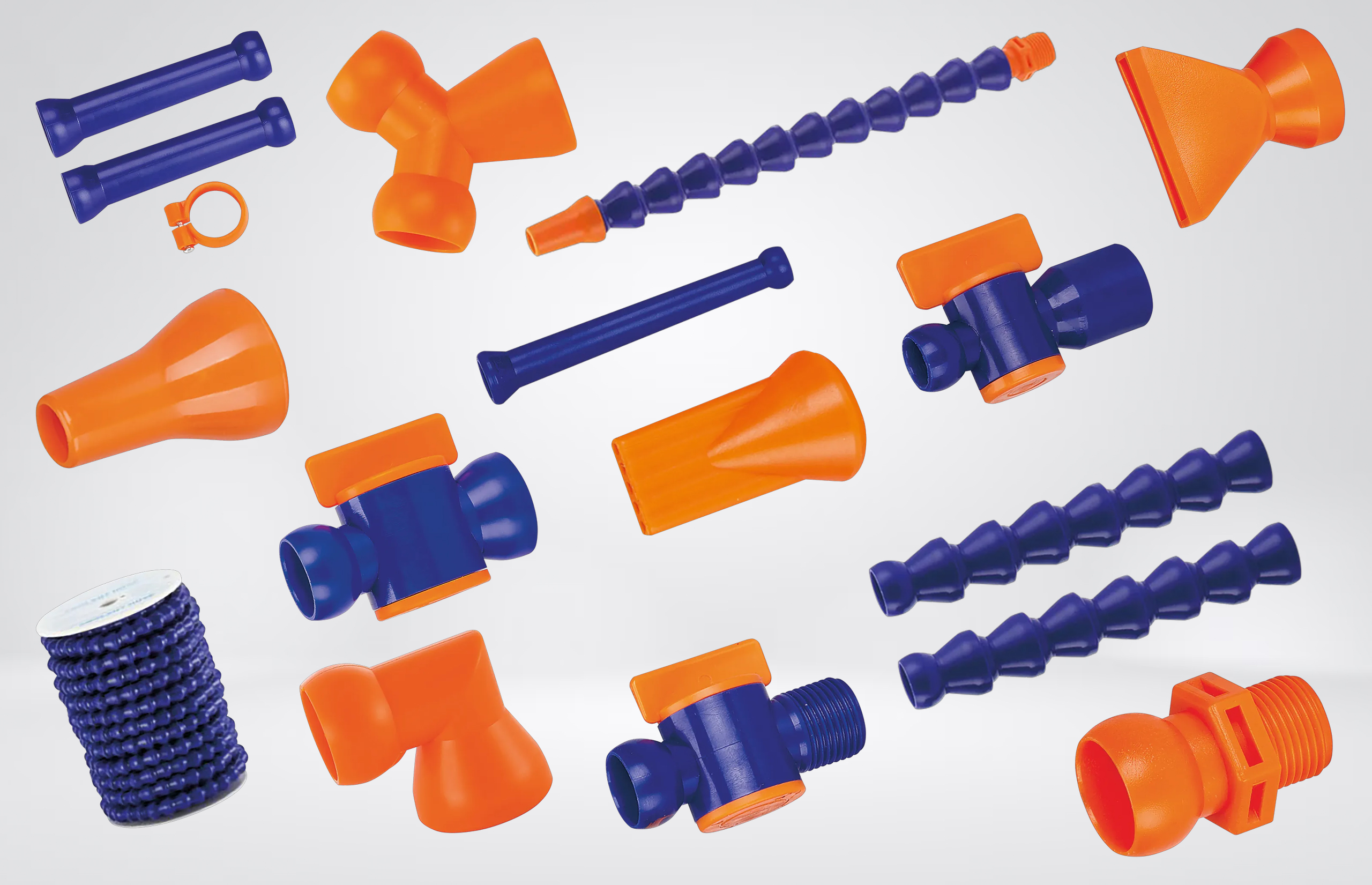
When engineers look at modular coolant systems, flexibility is usually the first benefit that stands out. Being able to reposition a nozzle quickly, add sections or adapt the coolant line for a different tool is clearly useful, particularly on machines where setups change regularly.
However, flexibility is only the visible advantage. The bigger benefit is control.
A coolant system only performs properly when it delivers fluid to the right place, at the right flow rate, throughout the machining operation. A nozzle that is slightly misaligned can leave the cutting edge running hotter than expected, allow chips to remain around the tool or force operators to reduce cutting parameters to maintain acceptable results.
For many workshops, the problem is not whether coolant is reaching the machine. It is whether the coolant is being delivered consistently and effectively at the point where it is needed.
This is where modular coolant systems provide a practical advantage. They allow engineers and operators to optimise coolant positioning during setup, maintain repeatable arrangements when jobs return to the machine and carry out maintenance without unnecessary disruption.
The real value is not simply having a flexible hose. It is having a coolant delivery system that supports a more stable and predictable machining process.
Why Coolant Delivery Matters
Coolant performance is often judged by whether fluid is reaching the area around the cutting tool, but that does not always mean it is doing the job effectively.
The cutting zone is where heat and friction are generated, so coolant needs to reach this area accurately. A large volume of coolant aimed at the wrong point can be less effective than a smaller, well-positioned stream that reaches the cutting edge directly.
This becomes particularly important during demanding operations such as drilling, deep pocket machining or cutting materials that generate significant heat. If coolant is not reaching the cutting zone properly, chips can remain trapped around the tool, temperatures can increase and tool wear can accelerate.
The symptoms are often noticed before the cause is identified. Engineers may see inconsistent tool life, changes in surface finish or the need to reduce cutting speeds to maintain quality. While tooling, feeds and speeds should always be reviewed, coolant delivery should be considered as part of the same process.
A modular coolant system will not solve an incorrectly specified machining process, but it does provide something that fixed arrangements often struggle with: the ability to accurately position coolant where it delivers the greatest benefit.
Easier Maintenance Means Less Downtime
Coolant systems operate in a demanding environment. Exposure to swarf, vibration, coolant chemicals and accidental impacts can eventually affect even well-installed systems.
One practical advantage of modular coolant systems is that problems can usually be dealt with at component level. If a nozzle becomes damaged or a section is worn, individual parts can often be replaced without removing the complete coolant arrangement.
This simplifies maintenance and reduces disruption. Instead of waiting for a complete assembly or rebuilding a complex pipework arrangement, maintenance teams can restore the system using standard replacement components.
It also makes stock management easier. Keeping a selection of commonly used sections, connectors and nozzles available can allow minor issues to be resolved quickly without unnecessary machine downtime.
The value is not just in replacing parts. It is in reducing the time a machine spends unavailable when something does need attention.
Choosing the Correct Nozzle Is Just as Important
When specifying a modular coolant system, the hose itself often receives the most attention. However, the nozzle is the component that determines how effectively coolant is delivered to the machining process.
Two systems using the same modular hose can perform very differently depending on the nozzle arrangement. The correct choice depends on where coolant needs to be directed, how much coverage is required and the type of machining operation being carried out.
A round nozzle is commonly used where a concentrated stream is required. This can be effective for directing coolant directly towards a cutting edge or helping remove chips from a specific area.
A wider spray pattern may be more suitable for some applications. Flat fan nozzles can provide broader coverage across larger cutting areas, although they may not provide the same focused delivery as a concentrated jet.
Some machining operations benefit from using multiple outlets rather than relying on one larger coolant stream. Positioning coolant from different angles can improve coverage around complex components or tools where a single nozzle cannot reach effectively.
Nozzle size also needs to match the available coolant supply. A nozzle that is too restrictive can reduce flow, while one that is too large may reduce the velocity needed to deliver coolant effectively into the cutting zone. The correct balance depends on the pump capacity, operating pressure and machining requirements.
This is an area where small changes can often make a noticeable difference. Customers sometimes look to increase coolant flow when the real issue is that the existing nozzle arrangement is not directing available coolant effectively.
The hose provides the flexibility and positioning, but the nozzle determines how that coolant reaches the tool. Both need to be considered together when specifying a reliable system.
How Hoses Direct Helps Customers Specify Modular Coolant Systems
Selecting a modular coolant system is rarely just a case of replacing a damaged hose or choosing a longer length. The most effective solutions come from understanding why the system is needed and what problems the current arrangement is creating.
A customer may initially be looking for a replacement section, but the underlying issue could be inconsistent coolant coverage, frequent nozzle adjustment, difficulty setting up new tooling or a coolant line that is not suited to the machine’s working environment.
Understanding those details helps identify whether the solution is a simple replacement or whether the coolant arrangement could be improved.
When reviewing a modular coolant application, Hoses Direct considers factors such as:
- The type of machining operation being carried out.
- The coolant type and compatibility of the materials.
- Available flow rate and operating pressure.
- The position of the cutting tool and required coolant coverage.
- Machine layout, access restrictions and potential sources of damage.
- The most suitable nozzle arrangement for the application.
- Future maintenance requirements and replacement availability.
This approach helps avoid a common mistake in component selection: replacing what has failed without addressing why it failed.
For example, if a nozzle is repeatedly being repositioned because coolant is not reaching the cutting area, the issue may not be the hose itself. The cause could be an unsuitable nozzle, poor routing or an arrangement that does not match the machining process. Correcting that underlying issue can provide a much better long-term improvement.
Hoses Direct supports engineers, maintenance teams and buyers by helping them select modular coolant components that suit the real operating conditions rather than simply matching dimensions from an existing installation.
A well-designed coolant system does not need to be complicated. It needs to deliver coolant accurately, remain stable during operation and allow practical adjustments when production requirements change. Get in touch with the expert team today to discuss your requirements and application.
Email: [email protected]
Phone: 0333 6000 501