


Hydraulic systems are only as reliable as their weakest mechanical support point. In many breakdown investigations, it isn’t the pump, valve or hose that fails first. It’s the unsupported pipe run vibrating under load, gradually stressing fittings until fatigue cracks appear.
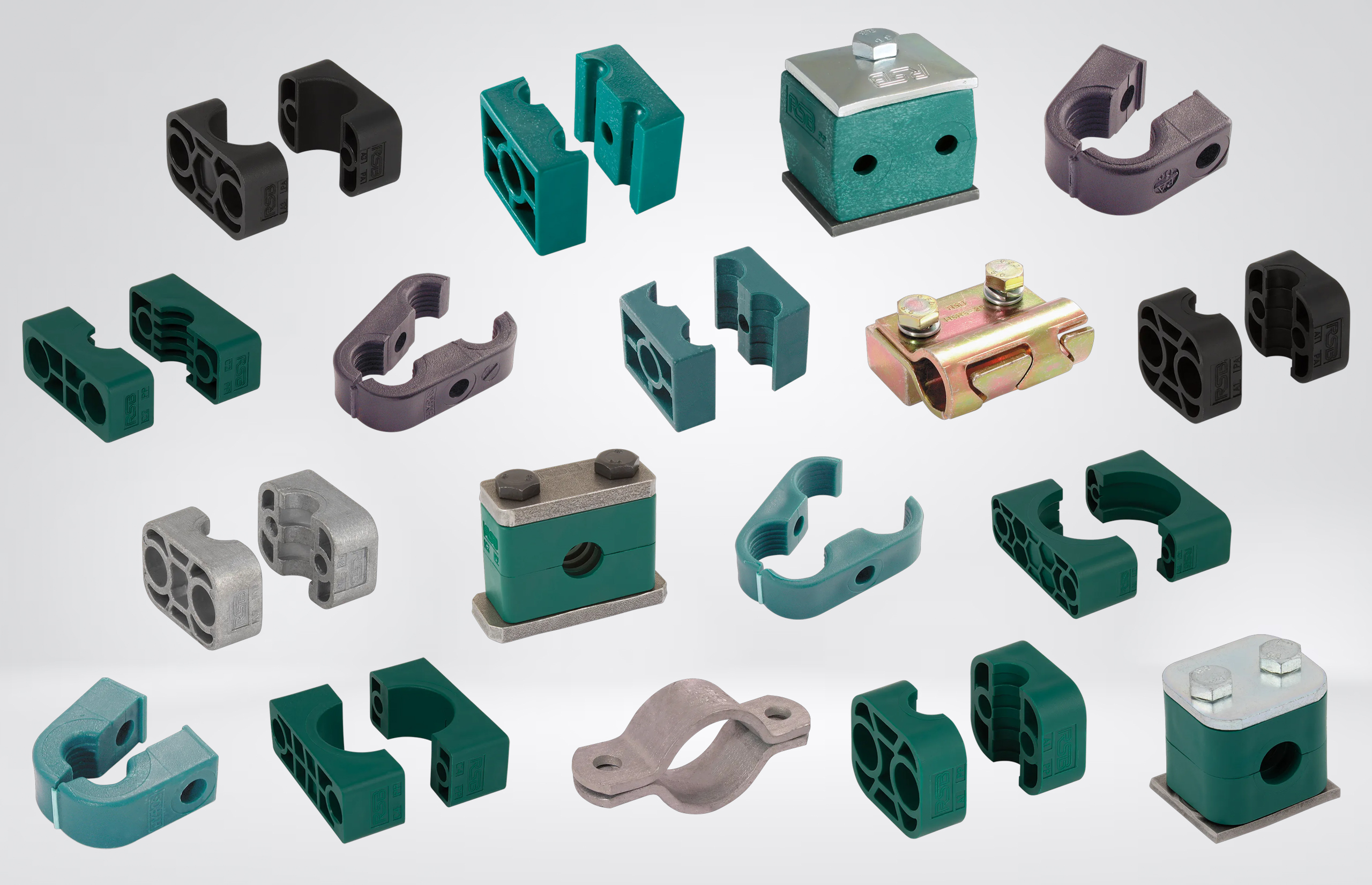
RSB tube clamps are designed to eliminate that risk. They provide structured pipe support, controlled spacing and vibration reduction across hydraulic installations in agriculture, construction, manufacturing and utilities.
Why Tube Clamps Are Critical in Hydraulic Installations
Hydraulic pipework carries pressurised fluid, but it also carries dynamic energy. Pressure pulses, machine movement and environmental vibration all transfer force into the pipe run. Without correct clamping, that energy concentrates at fittings and joints. The result is gradual fatigue, loosening connections and avoidable leaks.
Properly specified tube clamps contribute to the structural integrity of the hydraulic system. They control movement, distribute load and protect every connection downstream.
Noise Reduction and Installation Quality
Poorly supported hydraulic lines often produce audible chatter under pressure. This is more than an annoyance. It signals uncontrolled vibration, which accelerates wear.
Proper clamping reduces noise, protects against pipe-on-frame contact and delivers a professional installation finish. For OEM builders and maintenance teams alike, structured pipe routing improves both reliability and presentation.
Understanding the RSB Tube Clamp Range
RSB tube clamps are available in multiple duty ratings, materials and configurations. Selecting the right series depends on pipe diameter, pressure, environmental exposure and mechanical load.
The range covers light-duty through to fire-retardant applications, allowing engineers to match clamp specification to system requirements rather than defaulting to a one-size-fits-all approach.
Series A – Light Duty Applications
Series A clamps are designed for lower pressure lines and auxiliary hydraulic circuits. They are commonly used on return lines, lubrication circuits and secondary systems where mechanical loads are lower.
The Single Polypropylene Series A Light Duty Clamp Halves provide a practical solution for controlled routing in these applications. Polypropylene construction offers durability and chemical resistance for most hydraulic oils, while keeping costs appropriate for lighter installations. They are frequently specified in manufacturing plants and smaller machinery builds where weight and space are considerations.
Series B – Standard Duty Installations
Series B clamps are suited to the majority of industrial hydraulic systems. They offer greater load capacity and improved resistance to deformation under sustained pressure and vibration.
The Double Polypropylene Clamps with Hex Head Bolts – Series B Standard Duty Complete Clamps are widely used in agricultural machinery, construction plant and material handling equipment. The twin-line configuration supports parallel pipe runs, maintaining alignment and reducing movement between adjacent tubes.
Series O – Fire-Retardant and Specialist Applications
In utilities, energy and certain manufacturing environments, fire performance becomes a consideration. Series O clamps manufactured from polyamide 6 fire-retardant material are suited to these installations.
The Double Polyamide 6 Fire Retardant Series O Clamps provide enhanced temperature and fire resistance while maintaining structural support. They are commonly specified in enclosed plant rooms, power generation environments and high-risk industrial settings where compliance and safety standards must be met without compromising mechanical stability.
Single vs Double Clamp Configurations
Single clamps support individual pipe runs and are suitable where spacing allows clear separation between lines. Double clamps secure two parallel tubes within one assembly, reducing installation footprint and maintaining consistent spacing.
In mobile plant builds, double clamps often produce cleaner routing and improved vibration control. However, spacing constraints and maintenance access should always be considered during specification.
Material Selection: Polypropylene vs Polyamide
Material choice directly affects clamp longevity, temperature tolerance and environmental compatibility. Selecting purely on cost can result in premature degradation.
Understanding how each material performs in real operating conditions helps avoid replacement cycles and system instability.
Polypropylene Clamps
Polypropylene is resistant to many hydraulic fluids and provides good impact strength in standard industrial environments. It performs reliably in typical UK temperature ranges and offers a cost-effective option for the majority of agricultural and construction applications.
Where systems operate within normal ambient temperatures and are not exposed to direct flame risk, polypropylene provides dependable long-term performance.
Polyamide (Nylon) Fire-Retardant Options
Polyamide 6 fire-retardant material offers increased temperature resistance and improved behaviour in high-risk environments. It is often specified where installations must comply with stricter safety expectations.
In confined plant rooms or energy sector facilities, engineers frequently opt for fire-retardant clamps to align with site risk assessments. While not required in every application, choosing this material where appropriate enhances overall installation resilience.
Industries That Rely on RSB Tube Clamps
Reliable pipe support is critical across multiple UK sectors where hydraulic performance underpins productivity.
Agriculture depends on vibration-resistant clamping to withstand uneven terrain and heavy load cycles. Construction plant requires secure routing to protect high-pressure lines from shock and movement. Manufacturing and utilities environments demand stable, compliant installations within fixed infrastructure.
Across these industries, RSB tube clamps form part of the preventative approach to hydraulic reliability.
Protect Your Hydraulic Installation Before Failure Occurs
Pipe movement is rarely catastrophic at first. It begins as a minor vibration, develops into fatigue stress and eventually becomes a leak or fracture that stops production.
Upgrading to correctly specified RSB tube clamps strengthens the foundation of your hydraulic installation. Stable pipe routing reduces vibration transfer, protects fittings and extends overall system life.
Explore the RSB Tube Clamp Range
If you are reviewing a new build or addressing repeated pipe failures, consider:
- Series A light duty clamps for auxiliary and return lines
- Series B standard duty clamps for general hydraulic systems
- Fire-retardant Series O clamps for higher-risk installations
You can view the full range of hydraulic tube clamps and associated fittings online.
For technical guidance, bulk orders or specification support:
Email: [email protected]
Call: 0333 6000 501
If you are unsure which series suits your application, speak to our expert team. Correct clamping is a small specification decision that prevents major hydraulic downtime later.