


Contamination does not always start inside a hydraulic system. It often begins at the doorway.
Dirty boots entering a workshop. Tyres rolling in from a muddy yard. Hands moving between machines without surface control. On farms, it can be livestock movement between buildings. In zoos, it may be staff transitioning between enclosures. In all cases, the issue is the same: uncontrolled transfer.
In hydraulic workshops, contamination shortens component life. In agriculture and animal environments, it can spread livestock viruses or avian influenza. Viral Trapper mats and Virawipe disinfectant wipes provide practical, site-level control that fits into real industrial and agricultural workflows without slowing operations.
This is not about surface cleanliness for appearance. It is about controlling transfer before it becomes a failure or an infection.
Why Contamination Control Matters in Hydraulic and Agricultural Environments
Whether you are assembling hydraulic hoses or managing livestock housing, contamination control starts at the perimeter. Once contamination is inside the system or building, it becomes far more difficult and expensive to manage.
Both hydraulic reliability and biosecurity depend on controlling what crosses thresholds.
Hydraulic System Vulnerability
Hydraulic systems operate to tight tolerances. Even minor debris, moisture or organic contamination can accelerate wear in pumps, valves and seals.
ISO 4406 cleanliness standards define acceptable particle levels in hydraulic fluids. Yet contamination frequently enters long before fluid analysis highlights a problem. It arrives on boots, tools, packaging and hands.
Workshop entry control is therefore part of system protection.
Livestock and Avian Biosecurity Risks
On farms and poultry units, cross-contamination carries different consequences. Livestock viruses and avian influenza can spread via boots, vehicle tyres and equipment movement between sheds or sites.
Government biosecurity guidance routinely stresses controlled entry points and disinfectant use. Viral Trapper mats provide a practical method of disinfecting footwear and wheeled traffic as animals, staff or contractors move between areas.
Cross-Transfer Between Sites and Machines
Mobile engineers, farm workers and contractors move between multiple environments daily. Without surface controls, contamination travels with them.
Service vans, plant cabs, livestock sheds and toolboxes all become transfer points. Managing those surfaces is as important as managing fluids or feed hygiene.
Viral Trapper Mats: Controlling Contamination at Entry Points
Entry points are where control must begin. Once contamination crosses into a workshop, shed or enclosure, it spreads rapidly.
Viral Trapper mats are designed to interrupt that transfer.
How Viral Trapper Mats Work
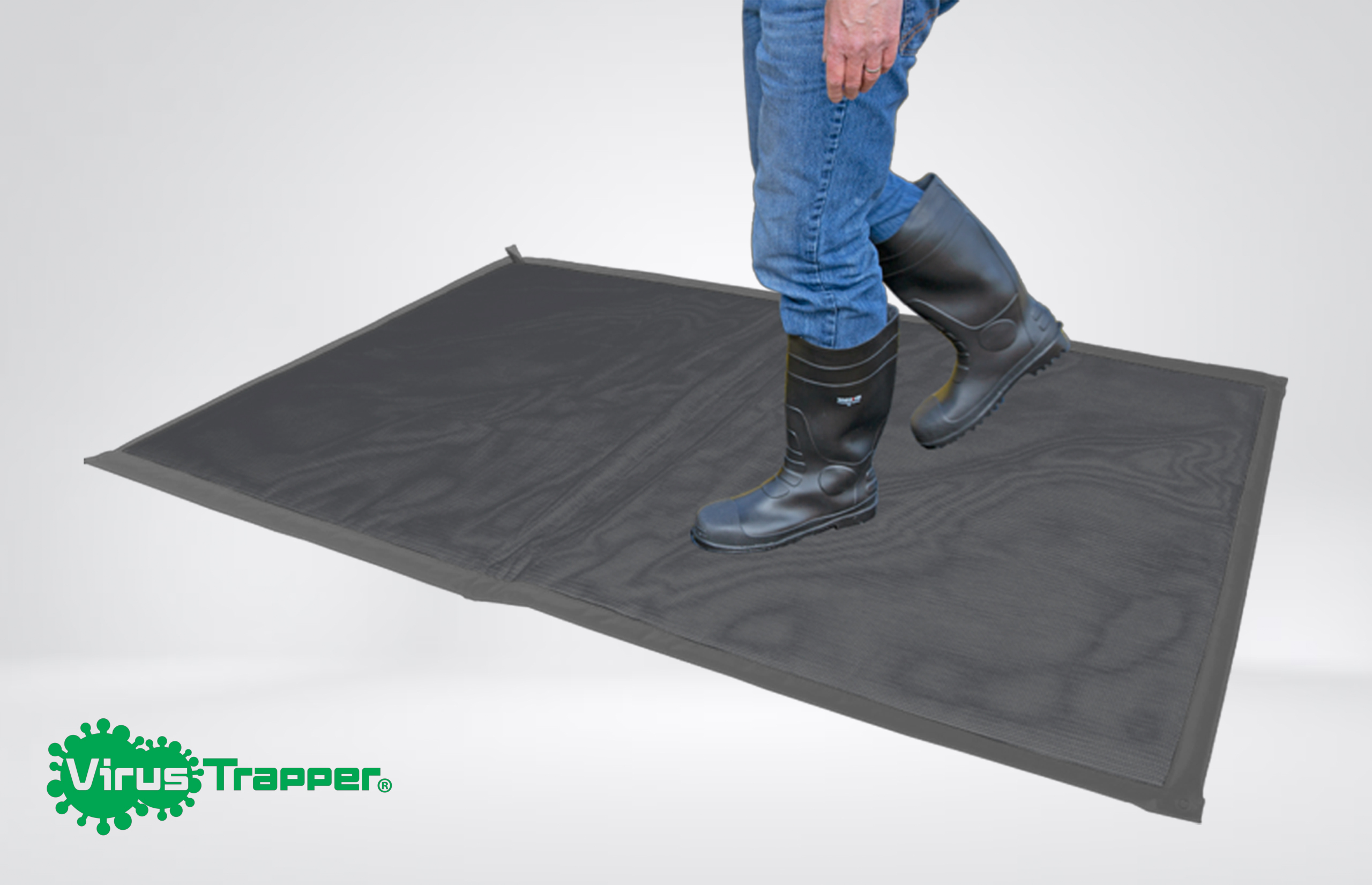
Viral Trapper mats are saturated with disinfectant solution. As footwear, wheels or animal hooves pass across the surface, the absorbent structure assists in removing debris while ensuring disinfectant contact.
In hydraulic workshops, this reduces dirt entering assembly areas.
On farms, it helps reduce viral spread between livestock buildings.
In poultry units and zoos, it supports biosecurity protocols at controlled access points.
The principle is simple: slow movement slightly at the threshold, reduce what crosses it.
Agricultural and Livestock Applications
On farms, these mats are commonly positioned:
- At entrances to poultry sheds
- Outside livestock housing
- Between yard and feed storage areas
- At visitor access points
They are particularly relevant where avian influenza or livestock viral risks are being actively managed.
For agricultural contractors moving between sites, portable mat placement helps limit cross-site transfer.
Workshop and Industrial Installation
In hydraulic environments, mats are typically positioned:
- At workshop entrances
- Between yard and hose assembly benches
- At mobile service van access points
- Outside clean storage areas
For plant maintenance teams, this reduces contamination before it reaches seals, fittings or hose assemblies.
Product Highlight: Viral Trapper Mat
The Viral Trapper Mat available from Hoses Direct is suited to high-traffic industrial and agricultural environments. Its construction allows repeated loading without collapsing or losing absorbency.
It supports hydraulic cleanliness strategies while also aligning with agricultural biosecurity requirements, making it suitable for mixed-use operations such as farm workshops servicing plant and livestock equipment.
Surface Hygiene in Real Working Environments
Entry control is only one layer. Surface management prevents internal spread.
In both hydraulic and agricultural environments, hands and tools are often the weakest link.
Why Controlled Wipes Outperform Basic Cleaning
Water and cloth cleaning may remove visible dirt, but does not provide reliable disinfection.
Hydraulic assembly requires clean sealing surfaces. O-ring grooves, threaded fittings and quick-release couplings are sensitive to contamination.
On farms and in zoos, tools used between animal groups must be disinfected consistently to reduce viral spread.
Having dedicated disinfectant wipes within reach increases compliance. If cleaning requires sourcing chemicals and cloths, it is often skipped during busy periods.
Virawipe 225 Wipes – Workshop and Fixed Locations
The Virawipe 225 Wipes Bucket Pack is suited to fixed environments such as:
- Hose assembly benches
- Livestock equipment rooms
- Maintenance workshops
- Feed preparation areas
The sealed bucket maintains moisture and allows controlled dispensing. The textured wipe surface assists in removing grease, oil residue and organic contamination.
Positioned correctly, these wipes become part of the workflow rather than an afterthought.
Virawipe 100 Everyday Textured Wipes – Mobile Use
The Virawipe 100 Everyday Textured Wipes are more compact and ideal for:
- Mobile hydraulic engineers
- Agricultural contractors
- Zoo maintenance teams
- Site-based plant engineers
Stored in vans, toolboxes or cabs, they enable rapid cleaning between jobs or enclosures.
Where Viral Trapper Mats & Virawipe Wipes Are Commonly Used
These products are not limited to a single sector. They are applied wherever contamination transfer presents operational or biological risk.
Hydraulic Workshops and Plant Maintenance
Reducing dirt and surface contamination protects seals, fittings and fluid systems. For teams assembling hoses or servicing cylinders, entry-point control supports long-term reliability.
Agriculture and Poultry Units
Biosecurity is critical in preventing livestock virus and bird flu transmission. Disinfectant mats and wipes provide visible, practical control measures aligned with farm hygiene protocols.
Zoos and Wildlife Facilities
Zoos operate strict enclosure separation and disease prevention strategies. Controlled entry mats and surface wipes assist in managing staff and equipment movement between animal areas.
Construction and Utilities
Mud and debris from site conditions introduce contamination into plant maintenance areas. Simple entry control reduces downstream cleaning and component wear.
Across all environments, the objective remains consistent: control contamination before it spreads.
Take Practical Steps to Control Contamination Before It Spreads
Contamination isn’t always obvious at first, it appears later as seal wear, valve scoring or premature failure. In agriculture, it can emerge as an infection that spreads and disrupts livestock operations.
Both are avoidable when thresholds and surfaces are controlled properly.
Viral Trapper mats provide practical entry-point biosecurity and workshop control.
Virawipe disinfectant wipes support surface hygiene across hydraulic, agricultural and animal environments.
Explore the range:
If you are reviewing contamination or biosecurity procedures in your workshop, farm or facility, speak to our team for specification guidance.
Email: [email protected]
Phone: 0333 6000 501
Control transfer at the source. Protect systems, livestock and operations before contamination becomes downtime.