


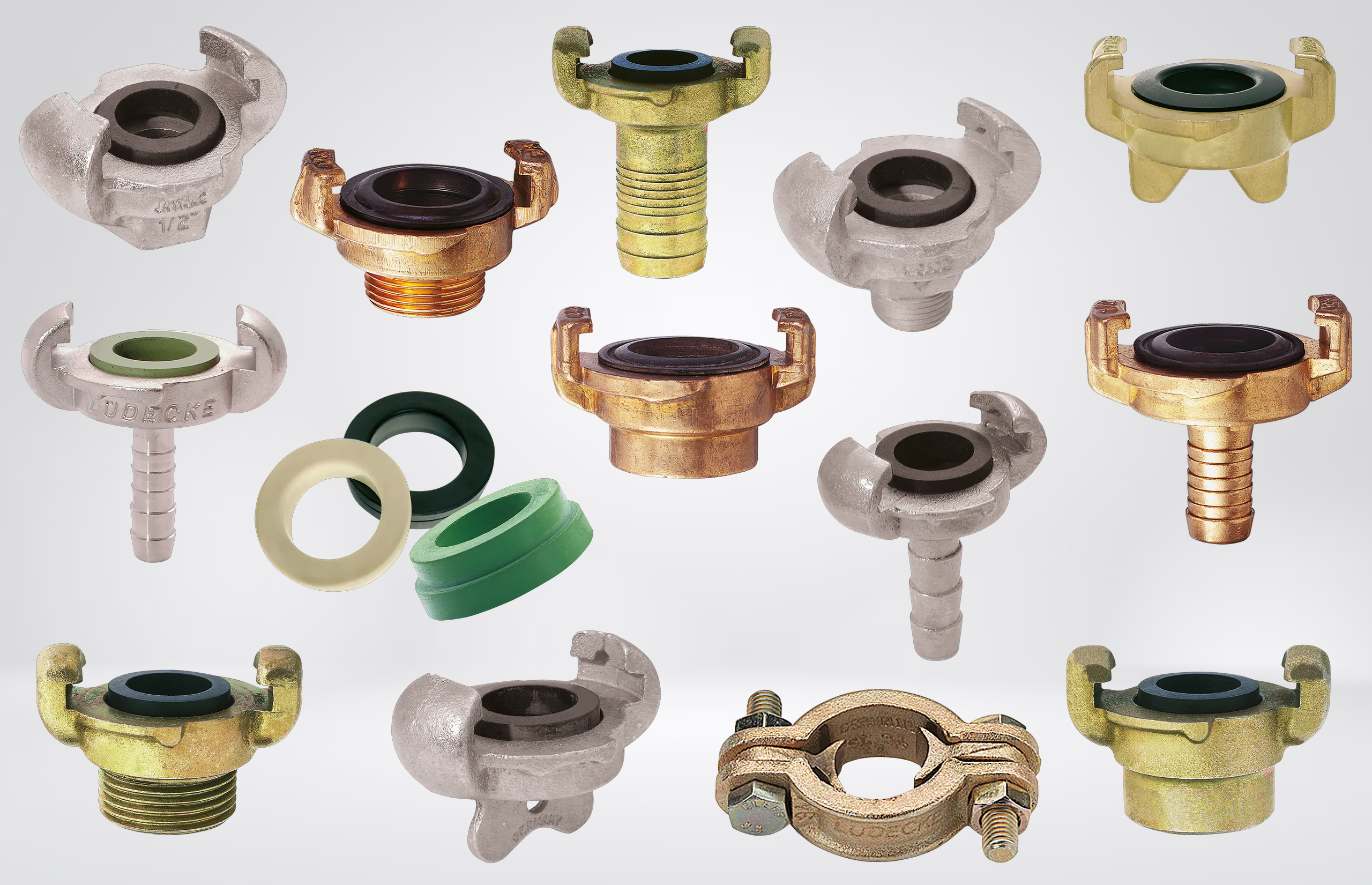
Claw couplings are one of those components that tend to get overlooked until something goes wrong. In compressed air systems, they sit at the connection points between hoses, tools, and compressors, which means any failure directly affects performance, safety, and uptime. Poor sealing, mismatched fittings, or incorrect specification can quickly lead to air loss, reduced tool efficiency, or even dangerous hose whip incidents.
For engineers and maintenance teams, the question is not just what claw couplings are, but where they make sense, where they don’t, and how to specify them correctly.
Understanding Claw Couplings in Compressed Air Systems
Claw couplings are a long-established solution for connecting compressed air lines, particularly in demanding environments where simplicity and durability matter more than precision sealing. Their design has remained largely unchanged because it works reliably under tough conditions.
What Is a Claw Coupling?
A claw coupling is a two-lug, symmetrical fitting that connects by pushing two ends together and twisting them into place. Each half is identical, which removes the need for male and female pairing and simplifies setup on site.
The connection relies on a rubber seal seated within the coupling head. When locked together, the claws compress the seal to create an airtight connection. This design is widely recognised across UK and European sites, particularly where standardisation is important.
Common Standards and Interchangeability
Most claw couplings used in compressed air systems follow common European standards such as DIN 3489. This standardisation is what allows different contractors, hire equipment, and existing site infrastructure to work together.
Interchangeability becomes especially important on mixed sites where multiple suppliers and subcontractors are involved.
Where Claw Couplings Are Typically Used
Claw couplings are not a niche product. They are widely used across industries where compressed air needs to be distributed quickly, reliably, and with minimal complexity.
Construction and Site Air Distribution
On construction sites, claw couplings are commonly used to connect compressors to pneumatic tools such as breakers, drills, and compactors. These environments are harsh, with dirt, impact, and frequent handling.
Their robust design makes them well suited to this type of work. Even when dropped or exposed to debris, they continue to function, which is not always the case with more delicate quick-release systems.
Agriculture and Mobile Equipment
In agricultural settings, claw couplings are often used for mobile compressed air applications. This includes tyre inflation, cleaning down machinery, and operating air-driven equipment.
The ability to connect quickly in outdoor conditions, often without perfectly clean components, makes claw couplings a practical choice where reliability is more important than precision.
Workshops and Manufacturing Plants
Within workshops and manufacturing facilities, claw couplings are typically found on main air lines or older infrastructure. They are used to supply general-purpose air tools and equipment where high flow is required.
However, in more controlled environments, they are sometimes replaced with finer quick-release couplings that offer better sealing and ease of use for repetitive tasks.
Hire Fleets and Temporary Installations
Hire companies and temporary setups rely heavily on claw couplings due to their universal compatibility and durability. Equipment is frequently moved between sites, and the ability to connect to existing systems without compatibility issues is critical.
This is one of the main reasons claw couplings remain widely used despite the availability of newer connection types.
Why Claw Couplings Are Still Widely Used
Despite advancements in pneumatic connection technology, claw couplings continue to be specified for many applications. Their strengths lie in their practicality rather than precision.
Fast Connection Without Tools
Time on site matters. Claw couplings allow operators to connect and disconnect hoses in seconds without additional tools. This is particularly valuable during setup, breakdown, or when moving equipment between locations.
In high-pressure environments where downtime directly impacts productivity, this simplicity is a key advantage.
Durable Design for Harsh Environments
Claw couplings are typically manufactured from steel or robust alloys, making them resistant to impact, wear, and contamination. They can withstand being dragged across floors, dropped, or exposed to dirt without immediate failure.
This durability is one of the main reasons they are preferred on construction sites and in outdoor environments.
High Flow Capability for Air Tools
Many pneumatic tools require a consistent and unrestricted airflow to operate effectively. Claw couplings offer a relatively large internal bore, which helps maintain flow rates and reduces pressure drop.
This makes them suitable for high-demand applications such as breakers and heavy-duty impact tools.
Interchangeability Across Equipment
Because claw couplings follow common standards, they allow different pieces of equipment to be connected without modification. This flexibility is particularly useful when working with mixed fleets or shared resources.
It removes the need for multiple adaptors and reduces the risk of delays caused by incompatible fittings.
Claw Couplings Available for Industrial Use
Specifying the right coupling starts with access to a range that covers different materials, sizes, and configurations. A complete offering allows systems to be built correctly rather than adapted to what is available.
View our full range of industrial claw couplings.
This includes claw couplings alongside other connection types, allowing engineers to select the most appropriate solution for their application rather than defaulting to a single option.
Supporting Components and Accessories
A reliable connection depends on more than just the coupling itself. Seals, safety clips, and correctly specified hose assemblies all play a role in system performance.
Ensuring these components are specified together helps prevent common issues seen in the field.
Take Control of Your Compressed Air Connections
Poorly specified or maintained couplings lead to air loss, reduced tool performance, and unnecessary downtime. These issues are often gradual, which means they go unnoticed until they start affecting output or safety.
Taking the time to review your compressed air connections, check compatibility, and replace worn components can have an immediate impact on system efficiency and reliability.
If you are reviewing or upgrading your setup, consider:
- Claw couplings for robust, high-flow applications
- Quick-release pneumatic couplings for controlled environments
For help specifying the right components or checking compatibility with your existing system, speak to our expert team at the below:
Email: [email protected]
Phone: 0333 6000 501