


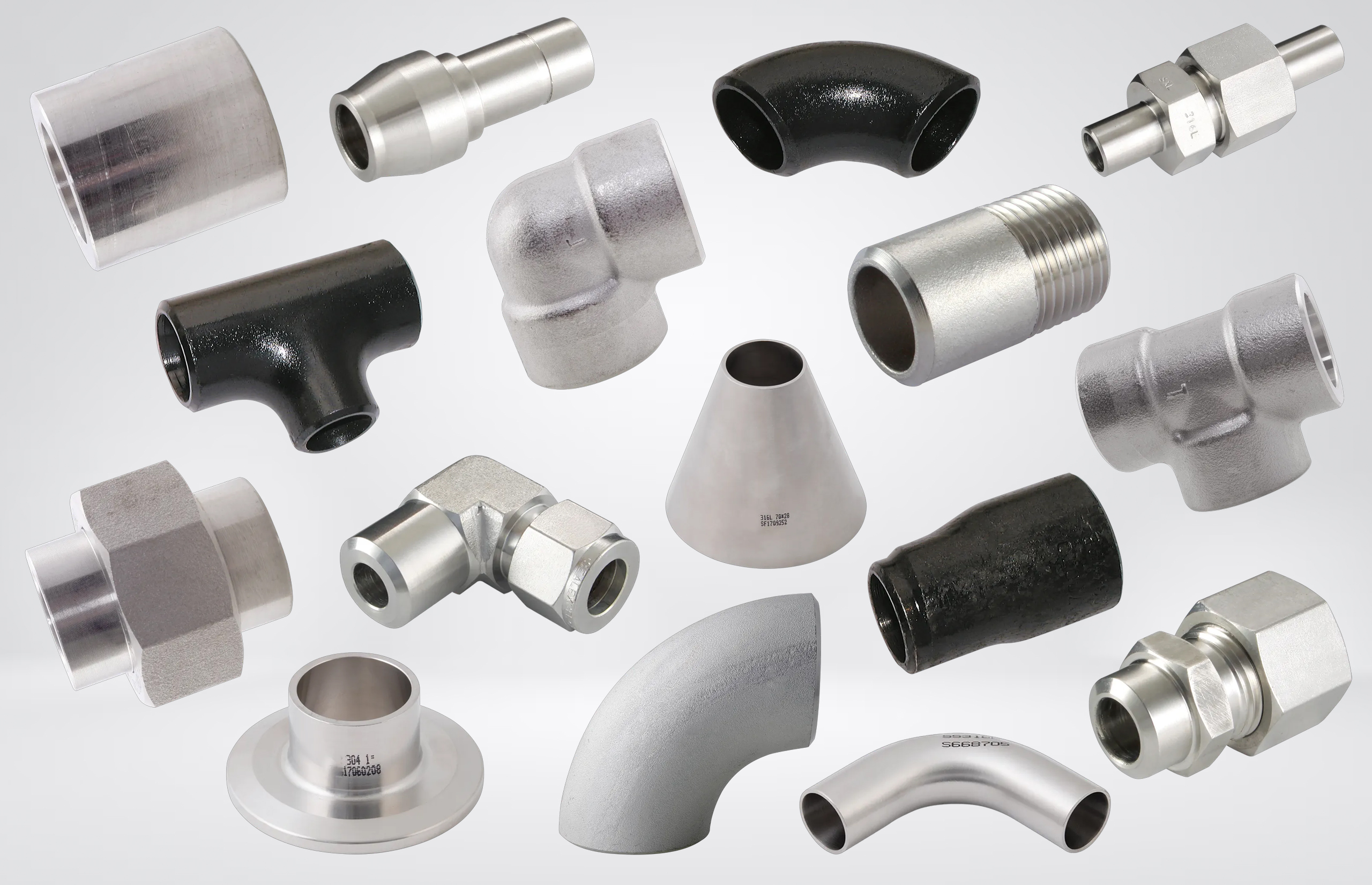
Weld fittings rarely get much attention during a project.
Most conversations focus on the pipe, valves, pumps or process equipment. Fittings are often viewed as simple components that connect everything together. Order the correct size, get them welded in place and move on.
This isn’t always the case though, we’ve seen plenty of projects where the fitting specification created more problems than anyone expected. Not because the fittings failed, but because they complicated fabrication, caused installation delays or introduced issues that only became apparent once the system was operational.
That’s the thing with weld fittings. They’re relatively small components within a much larger system, yet they can have a significant influence on how smoothly a project runs and how reliable the finished installation becomes.
Choosing the right weld fitting isn’t about finding the most expensive option or selecting the highest specification available. It’s about understanding what the system needs and making decisions that support the application, the fabrication process and the long-term operation of the pipework.
The First Question: What Is Flowing Through the System?
Before looking at schedules, pressure ratings or welding procedures, it’s worth asking a fairly simple question.
What’s going through the pipe?
The answer often dictates most of the decisions that follow.
Water, compressed air, hydraulic oil, steam, chemicals and gases all place different demands on a pipework system. What works perfectly well in one application may be completely unsuitable in another.
Water systems are generally forgiving. Chemical process lines are not.
Compressed air installations can often accommodate a wider range of materials, whereas aggressive chemicals may require specific material grades to prevent corrosion or contamination. Steam systems introduce temperature considerations that don’t exist elsewhere.
The environment around the pipework also matters.
A fitting installed inside a clean manufacturing facility will have a very different service life to one exposed to weather, washdown procedures or corrosive atmospheres. That’s why material selection should never be based solely on what’s worked elsewhere.
The operating conditions need to drive the decision.
Getting this part right early removes a lot of unsuitable options before the project even reaches the fabrication stage.
Understanding the Difference Between Butt Weld and Socket Weld Fittings
Most industrial pipework projects will involve either butt weld or socket weld fittings.
Both are proven connection methods, but they’re designed for slightly different purposes.
Butt weld fittings are generally preferred for larger pipe sizes and applications where strength, flow efficiency and long-term reliability are priorities. Because the pipe and fitting are welded directly together, the finished connection provides a smooth internal bore and creates a strong, continuous joint.
That’s one reason they’re widely used throughout manufacturing plants, utilities, process industries and heavy industrial environments.
Socket weld fittings are typically used on smaller bore systems. The pipe is inserted into a socket before welding takes place around the outside of the fitting.
They can simplify alignment during fabrication and are often selected for smaller diameter pipework where operating conditions allow.
Common Weld Fitting Materials and Where They Work Best
Carbon steel remains the default choice for a huge amount of industrial pipework, and for good reason.
It’s strong, readily available and relatively economical. Most fabricators are familiar with working with it and, in the right environment, it provides excellent service life.
For general industrial services, compressed air systems and many process applications, carbon steel does exactly what’s required.
The problems tend to arise when conditions become more demanding.
That’s where stainless steel often becomes the preferred option.
Food production facilities, pharmaceutical plants, water treatment sites and chemical processing environments frequently rely on stainless steel because corrosion resistance becomes a major consideration. In these applications, fittings such as 316L stainless steel butt weld reducers are commonly specified to maintain both performance and longevity.
Getting the Specification Right Before Fabrication Starts
The best opportunity to avoid problems is before fabrication begins.
Once pipe has been cut, prepared and welded into position, changes become far more expensive. What could have been resolved during specification often turns into rework, delays and additional labour costs.
The strongest pipework projects are usually the ones where the system is considered as a whole. Material selection, pressure requirements, fabrication methods, maintenance access and fitting configuration all need to work together.
That’s particularly true when selecting from the wide range of butt weld fittings available here on our site. While the basic principles remain the same, the most suitable fitting often depends on the specific application rather than simply the pipe size.
Whether that’s selecting a 316L stainless steel eccentric reducer for a corrosion-resistant process system, specifying a reducing branch tee for a new pipe run, or choosing the correct male butt weld connection to integrate with existing equipment, the detail matters.
Weld fittings may be relatively small components within a larger installation, but they have a direct influence on fabrication quality, reliability and long-term performance.
Taking a little extra time to get the specification right at the start usually results in easier fabrication, fewer installation issues and a more reliable system once everything is up and running.
If you’re reviewing an upcoming project, speak to our expert team or explore the available butt weld fitting options on the site here before fabrication starts.
Email: [email protected]
Phone: 0333 6000 501