


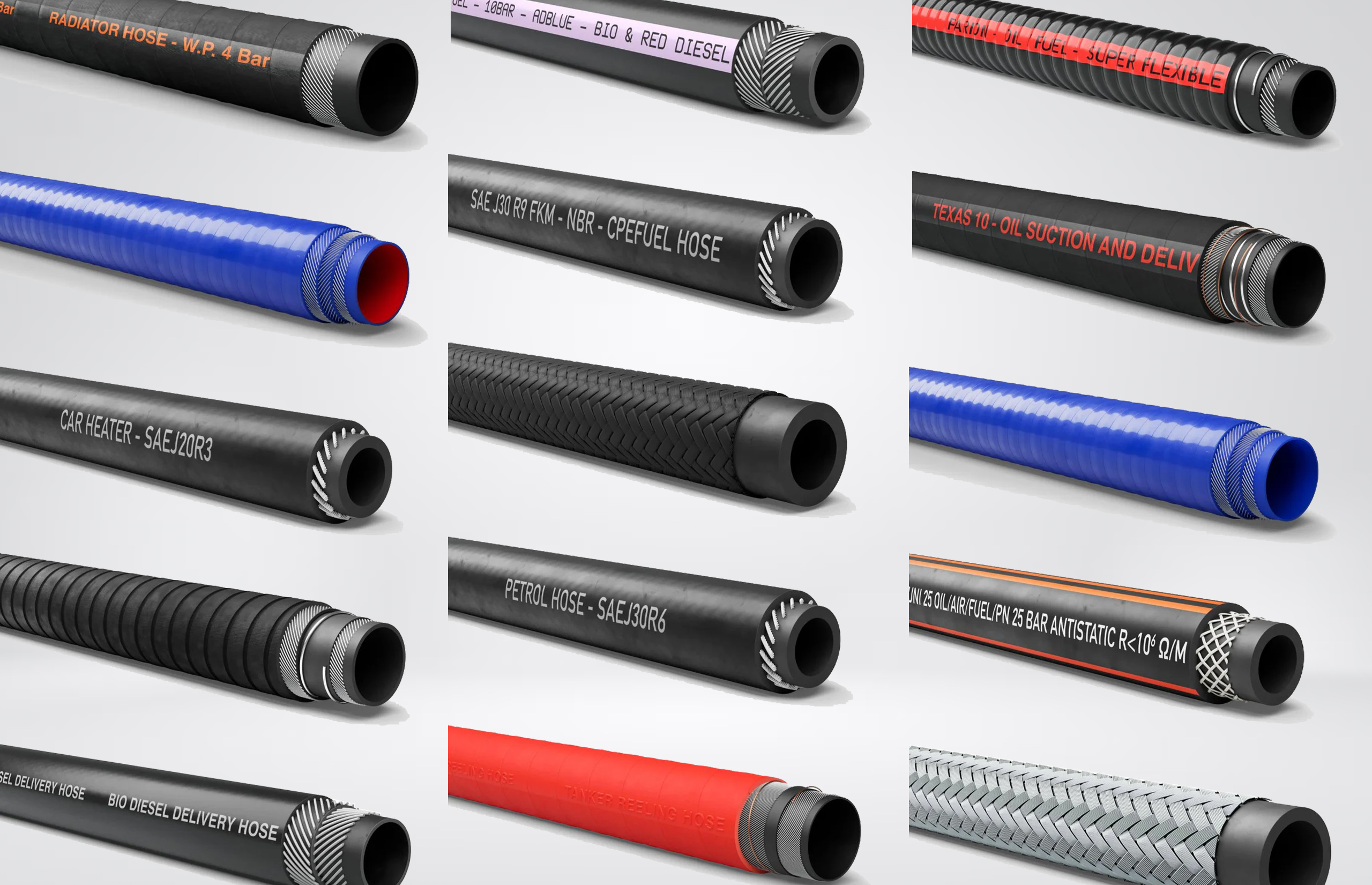
Choosing the right hose isn’t complicated, but it does require looking beyond the bore size and pressure rating. Diesel, oil and hydraulic fluid all place different demands on a hose assembly, and understanding those differences can save a lot of downtime later on.
It’s also worth remembering that not every hose failure is dramatic. Most aren’t. More often it’s a small leak that keeps returning, a hose that hardens and cracks prematurely, or a machine that’s constantly losing efficiency because a component isn’t performing as it should. Those issues can be just as costly over time.
Whether you’re maintaining a fleet of vehicles, running agricultural equipment, working on hydraulic machinery or simply replacing worn components, the same principle applies. The more closely the hose matches the application, the more reliable the system tends to be.
Before looking at hose types, pressure ratings or fittings, it’s worth understanding why the fluid itself has such a big influence on hose selection.
Why Diesel, Oil and Hydraulic Fluid Place Different Demands on a Hose
One of the easiest mistakes to make is treating diesel, oil and hydraulic fluid as broadly the same thing. They’re all liquid, they’re all petroleum-based in many applications, and from the outside the hose can look very similar.
The hose doesn’t see it that way.
Each fluid interacts differently with the inner tube of the hose. Some fuels can gradually affect certain rubber compounds. Hot oils can accelerate ageing and hardening. Hydraulic systems introduce a completely different challenge because the hose isn’t simply transporting fluid, it’s containing pressure, often continuously and sometimes under fairly demanding operating conditions.
That’s why you’ll find hoses that are perfectly suited to diesel transfer but completely unsuitable for hydraulic service. Likewise, many hydraulic hoses are designed around pressure performance first and foremost, rather than long-term fuel compatibility.
One thing that catches people out is that the application isn’t always obvious. A hose carrying hydraulic oil isn’t automatically a hydraulic hose application. If the oil is simply being transferred between containers or storage systems, the requirements can be very different from a pressure line feeding a hydraulic cylinder.
The same applies to diesel. A gravity-fed fuel line on a generator has different demands compared to a fuel dispensing hose that’s being handled daily, dragged across yards and exposed to the weather year-round.
Start With the Application, Not the Hose
When customers contact us looking for a replacement hose, one of the first questions we ask isn’t the hose size. It’s usually, “What is the hose doing?”
That might sound obvious, but the answer often tells you more than the existing hose specification ever will.
For example, a hose carrying diesel could be part of a fuel dispensing system, a return line, a suction application or a simple transfer hose between tanks. All four applications handle the same fluid, yet the hose requirements can be quite different.
The same principle applies to oil and hydraulic systems. A lubrication line feeding bearings doesn’t place the same demands on a hose as a hydraulic pressure line feeding a ram or motor. Looking purely at the fluid can sometimes lead you in the wrong direction.
Understanding whether the hose is under pressure, vacuum, constant movement or static installation helps narrow the options down very quickly.
Environment Often Causes More Failures Than Pressure
Pressure tends to get most of the attention. In reality, the environment is often what shortens hose life.
A hose routed close to an engine bay may be exposed to temperatures well above the fluid temperature itself. Mobile plant and agricultural equipment introduce constant vibration. Construction equipment often exposes hoses to abrasion from dust, debris and moving components.
Likewise, UV exposure, road salt, chemicals and poor routing can all contribute to premature failure. Sometimes the hose specification is correct on paper, but the installation environment was never fully considered.
Fuel Hose Selection: Where Problems Often Start
A fuel hose isn’t just carrying diesel. In many cases it’s being dragged across concrete, exposed to weather, repeatedly coiled and uncoiled, and occasionally driven over by vehicles or equipment.
For fuel transfer and dispensing applications, fuel compatibility is obviously important, but flexibility and durability matter just as much. A hose that becomes stiff after a period of use quickly becomes frustrating to work with and often suffers additional wear because operators have to fight against it.
This is where purpose-built diesel hoses come into their own. Products such as the BSPT Goodyear Softwall Diesel Hose are commonly used in fuel transfer and dispensing applications because they’re designed specifically around the demands of handling diesel fuel rather than trying to serve multiple unrelated purposes.
The important thing is matching the hose to how it’s actually being used, not simply what fluid is passing through it.
Hydraulic Hose: More Than Just Pressure Ratings
When discussing hydraulic hose, working pressure is usually the first figure everyone looks at.
It’s important, but it’s rarely the whole story.
Hydraulic systems generate pressure spikes, shock loads and constant pressure cycles throughout normal operation. A hose may never exceed its published working pressure and still experience fatigue over time.
That’s why impulse performance is so important in hydraulic hose design. Every time a machine operates, the hose is effectively being asked to absorb another cycle of stress.
A hose that performs well in a static application may not perform the same way on a machine that’s constantly moving, lifting, steering or operating attachments throughout the day.
Pressure ratings matter. Cycle life, flexibility and installation quality matter as well.
When Reinforcement Matters
Not every hydraulic application needs the heaviest hose available.
In fact, specifying more hose than necessary can sometimes create installation challenges of its own. Larger reinforcement packages often reduce flexibility, making routing more difficult in confined spaces.
For many mobile and industrial hydraulic systems, compact one-wire hoses provide a practical balance between pressure capability and flexibility. A 1SC hydraulic hose is a good example. These hoses are often chosen where installation space is limited but reliable hydraulic performance is still required.
We’ve found that flexibility is frequently underestimated until someone has to route a replacement hose through an awkward machine frame or around multiple hydraulic components.
The right reinforcement level is the one that matches the application. Not necessarily the biggest one available.
Oil Hose Applications That Often Get Overlooked
Oil hose applications sit in an interesting middle ground.
They’re often mistaken for either fuel hose or hydraulic hose applications, when in reality they’re neither.
Lubrication systems, waste oil recovery, bulk oil transfer and workshop dispensing systems all require hoses that are designed specifically for handling oils and lubricants. Pressure requirements are often lower than hydraulic systems, but compatibility remains critical.
For these types of applications, dedicated oil transfer hoses are usually the better choice. Products such as the Gates Essential™ Oil Master D are designed specifically for handling petroleum-based oils and lubricants, making them suitable for many oil transfer duties where a hydraulic hose would simply be unnecessary.
It’s another reminder that fluid compatibility and application requirements should always drive the specification.
Getting the Specification Right First Time
Most hose selection problems can be avoided by stepping back and looking at the complete application rather than focusing on a single specification.
Pressure matters. Fluid compatibility matters. Temperature, routing, flexibility and installation conditions matter too.
The reality is that hoses rarely fail for one reason alone. It’s usually a combination of factors that gradually shortens service life until a problem appears.
Taking the time to specify the correct fuel hose, oil hose or hydraulic hose from the outset helps reduce downtime, improve reliability and avoid the frustration of repeatedly replacing components that were never quite right for the job.
If you’re unsure which hose best suits your application, speak to our expert team who will be able to help narrow down exactly what you require for your application based on the operating conditions and environment. A few extra details and a discussion with the experts at the beginning often prevents much larger problems later on.
Email: [email protected]
Phone: 0333 6000 501