


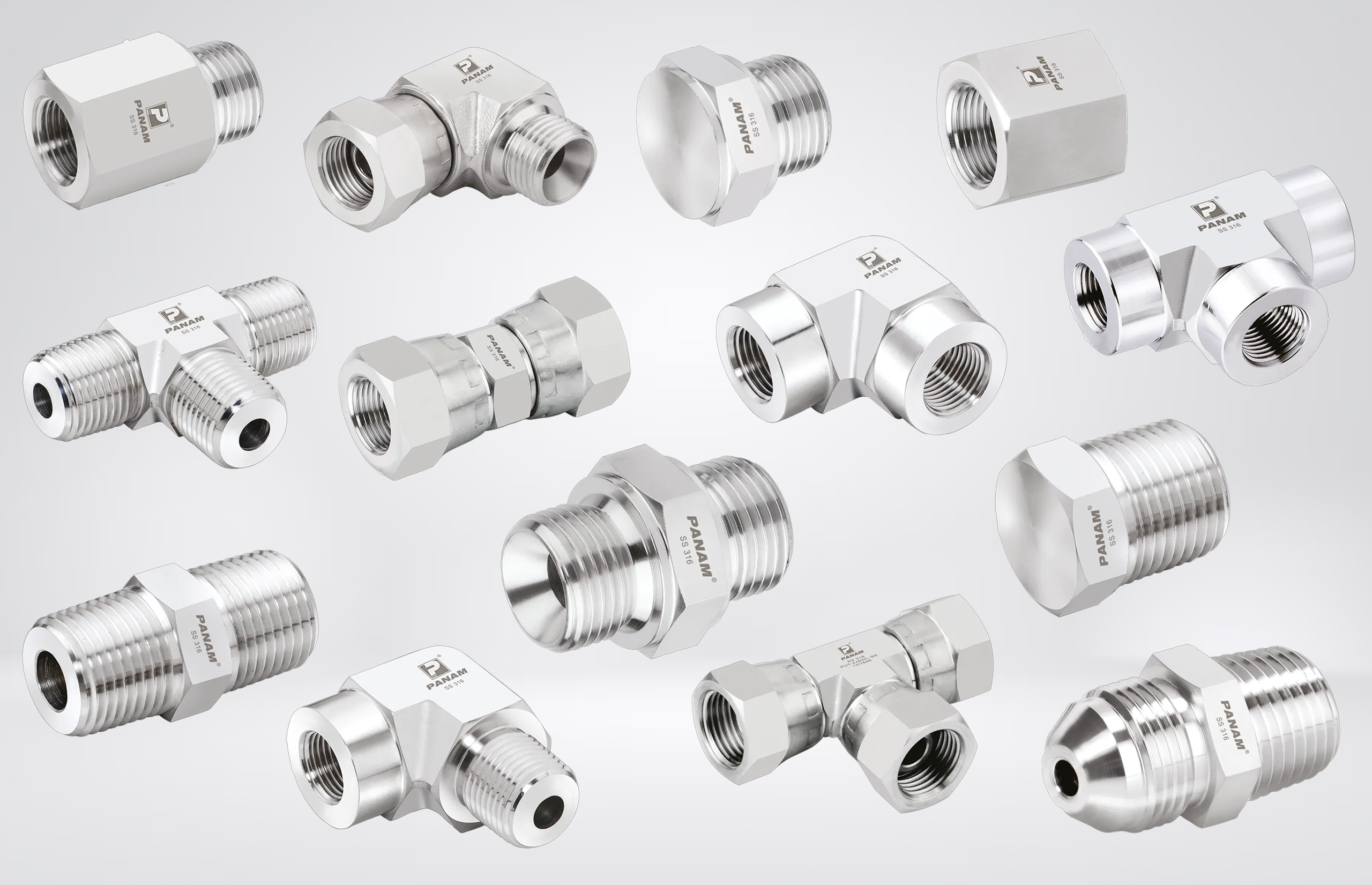
A hydraulic fitting can be designed for considerable pressure without being a high-pressure fitting. That distinction matters when maintaining or modifying equipment because the two can sometimes look deceptively similar.
The problem usually starts when specification is reduced to the connection itself. An engineer identifies a BSP, JIC or metric thread, finds an adapter that connects to it and assumes that because the fitting is sold for hydraulic use, it is suitable for the system pressure. On conventional hydraulic machinery, this may result in a perfectly acceptable connection. On specialist equipment operating at substantially higher pressures, the same approach can introduce a component that was never designed for the duty.
Pressure rating is only part of the distinction. High-pressure connection systems may use different sealing geometries, heavier construction, specialist tubing and specific assembly methods because containing very high pressure places different demands on the complete connection.
This means the question should not be simply, “Will this fitting connect?”
The useful question is: “Is this complete connection designed for the pressure and operating conditions it will actually experience?”
Understanding that difference helps prevent one of the more serious mistakes in high-pressure fluid systems: installing a component that fits correctly but is not correctly specified.
What Do We Mean by a Standard Hydraulic Fitting?
There is no single pressure rating for a ‘hydraulic fitting’. The term covers numerous connection systems used to join hoses, tubes, valves, cylinders, pumps and other components across hydraulic machinery.
BSP, JIC, ORFS and DIN metric connections are all widely used, but their pressure capability depends on the particular fitting design, size, material and manufacturer’s specification. A correctly selected conventional hydraulic fitting can operate reliably at substantial pressures, which is why describing these products as ‘low pressure’ in comparison with specialist fittings would be misleading.
The distinction becomes clearer when considering how hydraulic systems are normally designed. A conventional connection system provides a practical balance between pressure capability, flow, ease of assembly, component availability and maintainability. An excavator, hydraulic power pack or industrial machine does not benefit from specialist ultra-high-pressure connections simply because they carry a higher pressure rating. If the conventional fitting system is correctly rated for the application, it is normally the more practical engineering solution.
What Makes a High-Pressure Connection Different?
Once pressures move beyond the capability of conventional hydraulic connection systems, simply making an ordinary fitting slightly heavier is not enough. The connection itself may need to be engineered differently.
High-pressure systems can use purpose-designed fitting geometries, specialised metal-to-metal sealing arrangements, carefully controlled materials and substantially thicker-walled tubing. Manufacturing tolerances and surface condition also become increasingly important because small imperfections that might be manageable in less demanding service can become leakage paths or stress concentrations at much higher pressures.
This is why specialist high-pressure fittings are better considered as part of a connection system rather than as interchangeable individual components.
A fitting may be designed around a particular tube outside diameter, wall thickness, material and end preparation. The tubing and fitting then work together to contain the pressure. Replacing the tube with something that has the same outside diameter but a different wall thickness or material can therefore change the capability of the connection even though everything still physically assembles.
The same applies to hose-based systems. Hydraulic tensioning equipment, high-pressure jacks and pressure-testing equipment may use hoses, couplings and fittings specifically designed to operate together at the required pressure. Introducing an ordinary hydraulic adapter between them needs considerably more justification than confirming that the threads match.
There is no universal pressure at which conventional hydraulics end and ‘high pressure’ begins. A pressure that is comfortably within the capability of one connection design may exceed the rating of another, and pressure capability can change as fitting size increases.
What Information Do You Need Before Ordering a Replacement?
Where the original fitting is known, correctly specified and has provided reliable service, replacing it like-for-like may be straightforward. Where the component is unidentified or has failed unexpectedly, a few additional checks can prevent an incorrect replacement.
The most useful starting information is:
- maximum working pressure and, where known, relief-valve setting
- fitting type, thread and size
- sealing method
- hose markings or tube dimensions
- fluid or media
- operating temperature
- fitting material
- details of the equipment the connection is fitted to
- any known pressure cycling, vibration or unusual operating conditions
For tubing, outside diameter alone may not be sufficient in a dedicated high-pressure system. Wall thickness, material and information about the existing fitting system can be needed before a suitable replacement can be identified.
Clear photographs can help enormously, particularly when the fitting type is unknown. Ideally, photographs should show the complete connection before dismantling, close-ups of the fitting and sealing surfaces, and any markings on the hose, fitting or equipment. Including something that provides scale can also help where dimensions are difficult to establish.
Providing this information allows the replacement to be selected around the actual application rather than simply finding a component that matches the visible thread.
Hydraulic Fittings vs High-Pressure Fittings: A Quick Comparison
There is no single pressure figure that separates conventional hydraulic fittings from high-pressure fittings. The more useful distinction is whether the connection has been designed and documented for the pressure and duty of the application.
| Consideration | Conventional Hydraulic Fittings | High-Pressure Fittings |
| Typical applications | Mobile and industrial hydraulic machinery, power packs, cylinders and general fluid power systems | Hydraulic tensioning, high-pressure jacking, pressure testing, intensifiers and specialist equipment |
| Pressure capability | Depends on connection type, size, configuration and material | Specifically designed for substantially elevated pressures |
| Common connection systems | BSP, JIC, ORFS, DIN metric and other established hydraulic connections | Often dedicated high-pressure connection systems |
| How pressure is contained | May use O-rings, flares, bonded seals, tapered threads or other hydraulic sealing methods | Often uses specialised sealing geometry and purpose-designed metal-to-metal connections |
| Hose and tube requirements | Compatible hydraulic hose assemblies and tube systems | May require dedicated high-pressure hose or thick-walled tubing with specific preparation |
| Component substitution | Possible where connection standard, material and pressure ratings remain compatible | Often more system-specific; dimensional similarity should not be treated as interchangeability |
| Installation and maintenance | Familiar hydraulic assembly practices and widely available components | May require specialist tooling, tube preparation or assembly procedures |
| Main specification risk | Assuming the thread or ‘hydraulic’ description confirms pressure suitability | Introducing an unverified conventional component into an otherwise correctly rated high-pressure system |
Neither approach is inherently better. A conventional hydraulic fitting that provides sufficient documented pressure capability is normally the sensible choice for conventional hydraulic machinery. It is readily available, familiar to maintenance teams and generally easier to replace without introducing unnecessary complexity.
Dedicated high-pressure connections solve a different problem. They become necessary when the application demands pressure capability or connection performance that conventional hydraulic systems cannot provide reliably.
That distinction is more useful than trying to decide whether a particular number of bar qualifies as ‘high pressure’.
Getting the Connection Specification Right
The most important difference between hydraulic fittings and high-pressure fittings is not how substantial they look or what thread is machined onto the end. It is the pressure and operating conditions the complete connection has been engineered to withstand.
For engineers replacing a known fitting on a conventional hydraulic machine, this can be straightforward. Confirm the connection, size and working-pressure requirement, then select a compatible component with the appropriate documented rating.
More investigation is justified when the fitting is unidentified, the system operates at unusually high pressure or the connection has failed repeatedly. In those situations, copying the component that was already installed can reproduce an existing specification problem.
Hoses Direct can help identify conventional hydraulic and specialist high-pressure connections and determine what information is needed to specify a suitable replacement. Clear photographs and dimensions are useful, but maximum working pressure, media, temperature and details of the hose, tube or equipment allow our technical team to look beyond whether the threads simply match.
Get in touch with the expert team today to discuss your requirements, and we will ensure you get the right part at the right pressure for your application.
Email: [email protected]
Phone: 0333 6000 501