


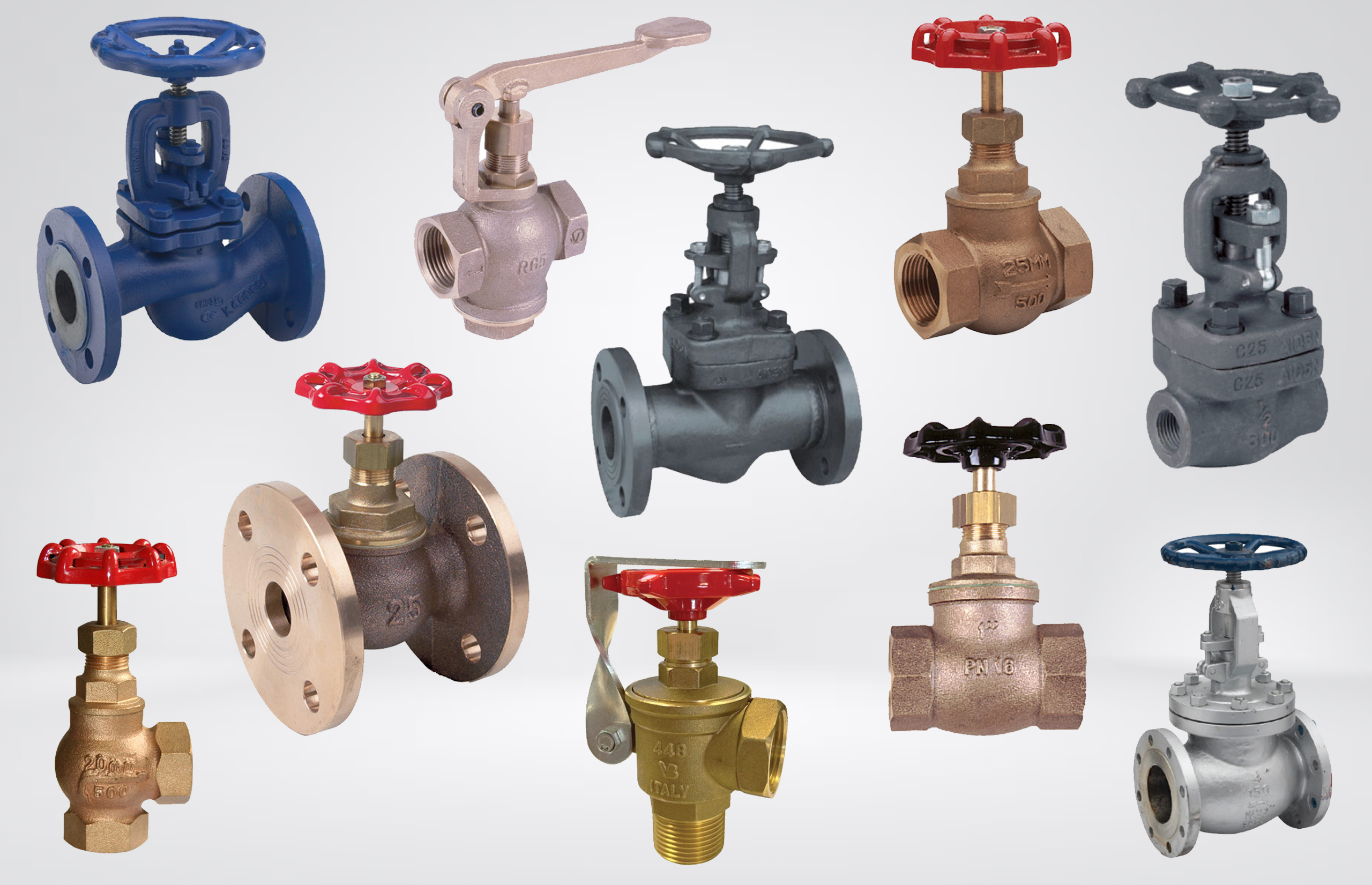
Many valve problems begin with a reasonable-looking decision made for the wrong duty. A valve matches the pipe size, has the correct pressure rating and appears suitable for the media, yet the process still proves difficult to control once the system is running. This often happens when an isolation valve has been used in a position that actually requires steady, repeatable regulation.
Ball valves and gate valves are effective where the main requirement is to start or stop flow with minimal restriction. They are less convincing when operators need to hold a process at a controlled intermediate flow rate. A globe valve is designed around that requirement. Its internal geometry sacrifices some flow efficiency in exchange for more predictable adjustment and better performance while partially open.
That trade-off is worthwhile in applications where unstable flow affects temperature, dosing accuracy, combustion, equipment protection or production consistency. It is not worthwhile where the valve will simply remain fully open or fully closed for most of its service life. The specification therefore needs to begin with the valve’s actual duty, not with the assumption that one valve type is inherently better than another.
Why Flow Control Accuracy Matters
Many industrial systems are designed around a defined operating flow rather than the maximum volume the pipework can carry. Heat exchangers, cooling jackets, burner systems and chemical processes often have a relatively narrow range in which they perform efficiently. Move outside that range and the process may still run, but it becomes less stable, less economical or harder to maintain.
In a steam-heated process, excessive flow can cause temperature overshoot, poor control response and wasted energy. Insufficient flow may lengthen heating cycles or prevent the process from reaching its target temperature under peak demand. Similar problems occur in cooling circuits, where uneven flow distribution can leave one item of equipment overcooled while another operates too hot.
Operators sometimes try to correct these problems by partially closing a ball valve. This can appear to work at first, but the adjustment is rarely progressive. A small handle movement may cause a large change in flow, particularly near the closed position. The result is repeated adjustment, inconsistent settings and a process that depends too heavily on operator judgement.
Poor control also creates problems elsewhere in the system. Pumps may operate away from their preferred duty point, control loops may continually hunt for a stable position, and downstream equipment may be exposed to fluctuating temperatures or pressures. A correctly selected control valve helps remove these disturbances rather than forcing the rest of the system to compensate for them.
Why Globe Valves Provide Better Throttling Control
A globe valve controls flow by moving a disc towards or away from a stationary seat. The movement is linear, allowing the opening to change progressively as the handwheel or actuator travels. This gives the operator or control system a more usable adjustment range than a valve designed primarily for rapid isolation.
The important point is not that a globe valve can restrict flow. Almost any valve can do that. Its advantage is that it can remain partially open as part of its normal duty without relying on a narrow or unstable operating position. This makes it easier to establish a required flow rate, return to a known setting after maintenance and make small corrections as system demand changes.
The valve still needs to be sized correctly. An oversized globe valve may spend most of its working life barely open, concentrating the useful control into a small part of its travel. That makes the process unnecessarily sensitive and can increase localised velocity across the seat. An undersized valve creates the opposite problem, operating close to fully open while introducing excessive pressure loss and leaving little additional capacity.
Matching the valve to the required flow range is therefore more important than simply matching its nominal bore to the pipe. The objective is to give the valve enough usable travel to control the process under normal conditions, with sufficient allowance for changes in load.
Steam Systems
Steam regulation is one of the clearest applications for a globe valve because demand often changes throughout the operating cycle. Heat exchangers, process vessels, calorifiers and heating coils rarely require exactly the same steam flow from start-up through to steady production.
A globe valve allows steam flow to be increased gradually during warm-up and reduced as the process approaches its target temperature. This helps limit overshoot and gives the operator more control than a quarter-turn valve that delivers a large change in flow over a small movement.
Steam service also places greater demands on the valve specification. Body material, pressure class, seat design, packing and maximum operating temperature all need to be considered. A valve that is suitable for water at the same nominal pressure may not be appropriate for saturated or superheated steam.
Cooling Water and Heat Exchanger Circuits
Cooling systems often suffer from poor distribution rather than insufficient total flow. Water follows the path of least resistance, so equipment closest to the pump can receive more than it needs while branches with greater pipe resistance receive too little.
Globe valves can be used to introduce controlled resistance into individual branches and balance the circuit. This is particularly useful around hydraulic oil coolers, compressors, moulding equipment and process heat exchangers where stable temperature depends on maintaining a consistent flow.
Where settings need to remain fixed, a lockable handwheel, position indicator or dedicated balancing valve may be worth considering. This reduces the risk of an operator unintentionally altering a commissioned flow setting during routine work.
Chemical Dosing and Process Fluids
Chemical dosing and blending applications benefit from a valve that responds steadily to small adjustments. An abrupt increase in additive flow can affect concentration, reaction rate, product quality or treatment efficiency before the operator has time to correct it.
A globe valve can provide useful manual regulation, but it should not be confused with a complete metering solution. Where the process requires highly accurate or automated dosing, the valve may form part of a wider system that includes a dosing pump, flowmeter and control loop. The valve improves controllability, but the accuracy of the overall process depends on all of these components working together.
Material compatibility needs to be assessed across the complete valve, not only the body. A stainless steel body may be suitable for the fluid while the seat, gland packing or stem material is not. Concentration, temperature and contamination can also change compatibility, so a generic statement that a material is “chemical resistant” is not enough for specification.
Where the media can crystallise, polymerise or leave deposits, the internal flow path and maintenance requirements deserve particular attention. A valve that gives excellent control when clean may become difficult to operate if solids build up around the seat and stem.
Fuel, Oil and Burner Systems
Burner and fuel systems require stable delivery because flow variation affects combustion quality. Too much fuel can create inefficient or unstable burning, while too little may cause flame failure or prevent the equipment from reaching its rated output.
A globe valve can provide controlled manual adjustment during commissioning and routine operation. It is particularly useful where the system needs a steady set point rather than rapid on/off control. In automated burner systems, however, the regulating valve must be selected as part of the complete safety and control arrangement rather than treated as a standalone component.
Oil viscosity also changes with temperature. A valve that performs acceptably once the oil is warm may be much more restrictive during a cold start. This needs to be allowed for when selecting the valve size and assessing available pressure.
Test Rigs and Pilot Systems
Test equipment often requires the same operating condition to be reproduced repeatedly. A valve setting that cannot be returned to consistently makes test results harder to compare and introduces unnecessary variation into the process.
Globe valves are useful where an engineer needs to adjust flow gradually and observe the effect on pressure, temperature or equipment performance. Their suitability becomes even greater where the system operates across several test points rather than at one fixed condition.
For more demanding test work, a handwheel position alone may not provide enough repeatability. A graduated indicator, calibrated flowmeter or actuated control valve may be required. The globe valve provides the mechanical control characteristic, but measurement is still needed where results must be documented or validated.
Choosing the Right Globe Valve
A sound specification begins with the process conditions:
- What fluid will the valve control?
- What are the normal and maximum pressures?
- What temperature range will it experience?
- What flow is required during normal operation?
- How much pressure can the system afford to lose?
- Will the valve regulate continuously, adjust occasionally or act mainly as isolation?
- Does the process contain solids, contamination or corrosive chemicals?
- Is manual operation sufficient, or is actuation required?
- What shut-off performance is expected?
- Can the valve be installed and maintained safely?
The answers should then be checked against the valve’s flow coefficient, pressure-temperature rating, material compatibility and control characteristics. This prevents the common situation where a valve is technically capable of fitting the system but poorly suited to operating within it.
Actuation also changes the selection process. Pneumatic and electric actuators need to provide enough force to move the valve under the maximum expected pressure differential. The valve characteristic, actuator travel and control signal should be considered together if stable automated control is required.
Where information is incomplete, replacing like-for-like may be the safest immediate option but not necessarily the best long-term one. Measuring actual flow, checking pressures on both sides of the valve and reviewing the failure pattern can reveal whether the existing specification should be changed.
Using Globe Valves as Part of the Complete System
Most well-designed systems use several valve types because the duties are different. Ball valves may isolate equipment, gate or butterfly valves may control access to larger distribution lines, and globe valves may regulate flow into specific process equipment.
This division of duties improves both performance and maintenance. Isolation valves can remain low restriction, while control valves are installed only where their pressure loss and adjustment characteristics provide a clear benefit.
It also avoids paying for control capability where none is required. A system filled with globe valves may be controllable, but it may also carry unnecessary pressure loss and higher component costs. A system filled with isolation valves may be inexpensive, but difficult to balance and regulate.
The correct approach is not to favour one valve design across the whole installation. It is to give each position a clearly defined duty and select the valve that performs that duty with the least compromise.
Globe valves are most valuable where a process depends on steady, repeatable flow rather than simple isolation. Steam regulation, cooling water balancing, dosing, fuel control and test equipment are all applications where their progressive adjustment can improve process stability and reduce the need for continual operator correction.
Where a system suffers from unstable flow, frequent adjustment or repeated seat and trim failures, the problem is worth investigating rather than accepting as normal maintenance. Hoses Direct can help review the application, compare suitable valve types and identify whether the existing component is correctly sized and specified for the duty. Speak with the expert team today, and we’ll ensure the valve you’re currently using is the correct one for your application.
Email: [email protected]
Phone: 0333 6000 501