


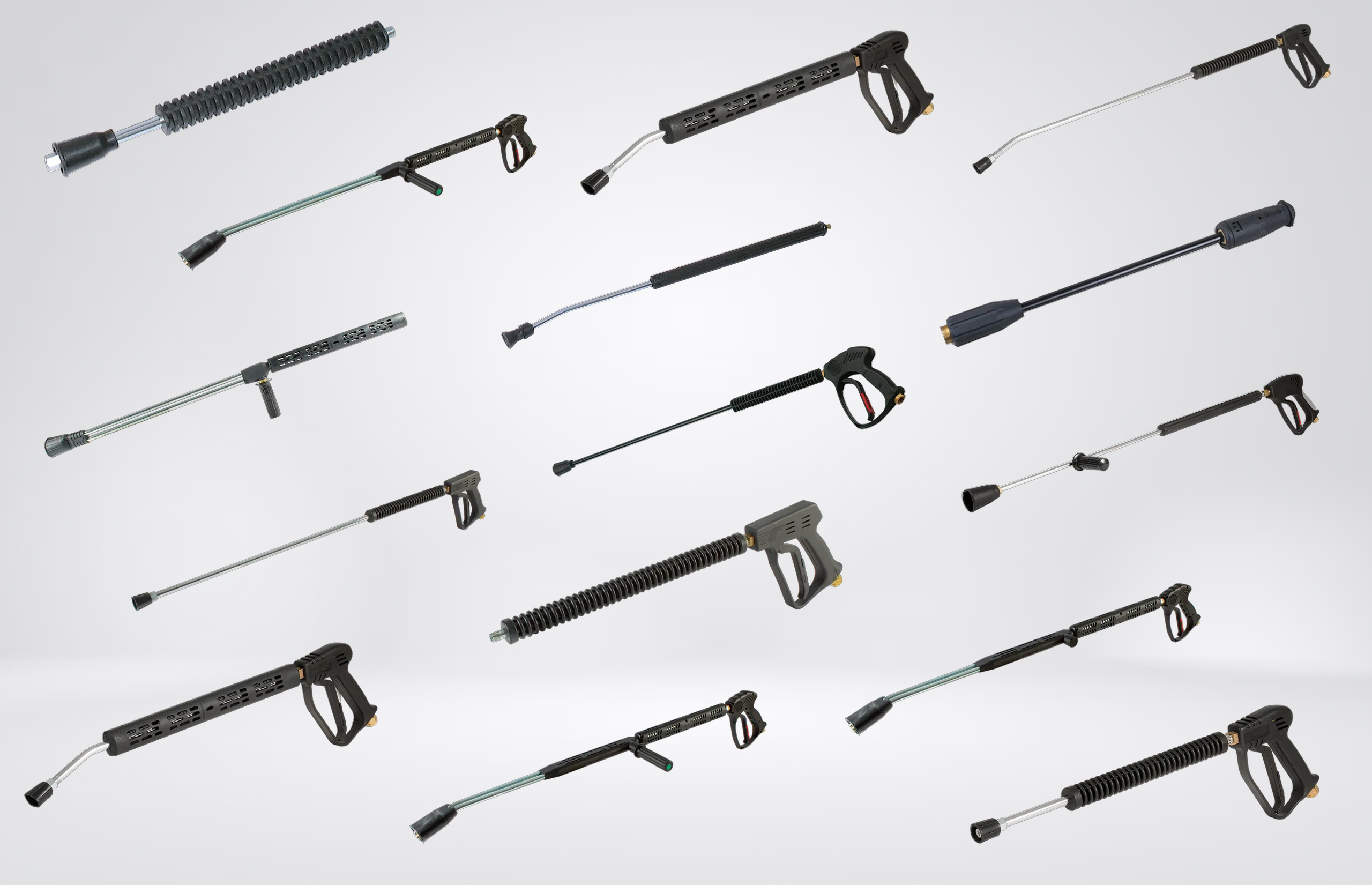
When people have problems with pressure washing equipment, the lance isn’t usually the first thing they blame.
It’s normally the machine.
Not enough pressure. Poor cleaning performance. Jobs taking longer than they should. Then you look a little closer and find a worn trigger, a damaged lance tube or a hose that’s making the whole setup awkward to use.
The pressure washer itself might still be perfectly serviceable.
The lance, meanwhile, has been dragged around machinery, knocked against walls, dropped onto concrete and used thousands of times over the course of a year. It’s often the hardest-working part of the system.
For occasional use, almost any decent lance will get the job done. Heavy daily use is where the differences start to show.
Why Some Lances Last and Others Don’t
The phrase “heavy-duty” gets used everywhere, but not all lances are built for the same workload.
A lance used once a week around a small workshop lives a very different life to one being used all day on plant machinery, commercial vehicles or agricultural equipment.
Most failures tend to happen in predictable places. Trigger mechanisms wear out. Connections start leaking. Threads become damaged. Sometimes the lance tube itself gets bent after repeated knocks and impacts.
The interesting thing is that these issues rarely appear overnight. Equipment usually gives plenty of warning before it fails completely.
One thing we’ve noticed over the years is that operators often adapt to worn equipment without realising it. They work around a sticky trigger or a twisted hose because the deterioration happens gradually. Then they replace the lance and suddenly remember how the setup is supposed to feel.
Build quality plays a big part here.
A robust trigger assembly, good quality fittings and properly designed hose connections generally survive daily use far better than lighter-duty alternatives. Features such as swivel triggers can also make a noticeable difference, particularly when cleaning larger equipment where the hose is constantly twisting as you move around the machine.
The BSPP 40 LPM pressure wash lance swivel trigger is a good example. It doesn’t increase cleaning performance, but it can make the equipment easier and more comfortable to use throughout a long working day. That’s often just as valuable.
Pressure Ratings Only Tell Part of the Story
Pressure rating is usually the first specification people compare.
It’s important, but once you’ve confirmed the lance is suitable for the machine, other factors often become more relevant.
The application matters.
Cleaning a fleet of vans requires a different approach to washing down excavators, tractors or industrial equipment. Reach, manoeuvrability and operator comfort all start influencing the decision.
A longer lance can be useful when cleaning larger machinery because it allows operators to reach awkward areas without climbing onto equipment or working too close to high-pressure spray. Products such as the 36″ high-pressure 2-piece lance gun are often chosen for exactly that reason.
At the same time, longer isn’t always better.
We’ve had customers ask for the longest lance available, only to discover it’s tiring to use after several hours. More reach usually means more leverage, and more leverage means more strain on the wrists and shoulders.
The same principle applies to the hose.
A surprisingly large number of usability issues come back to hose length rather than the lance itself. A 10m heavy-duty hydraulic lance hose gives operators more freedom to move around equipment without constantly repositioning the pressure washer. It sounds like a small thing, but over the course of a day it can save a lot of unnecessary effort.
The best setups are rarely built around a single specification. They’re built around how the equipment is actually going to be used.
What Makes a Lance Easier to Live With?
When people are buying replacement equipment, they often focus on performance.
The people using the equipment every day usually focus on something else entirely.
They want a setup that doesn’t become annoying after a few hours.
That might sound overly simplistic, but it’s true.
A trigger that’s uncomfortable to use, a hose that constantly twists, or a lance that’s poorly balanced can make a straightforward cleaning job feel much harder than it needs to be.
This is where the trigger assembly becomes more important than many people realise.
For occasional use, almost any trigger gun feels acceptable. Use it hundreds of times a day and the differences between products become much more obvious.
A quality swivel trigger arrangement, such as the BSPP 40 LPM pressure wash lance swivel trigger, helps reduce the tendency for the hose to fight against the operator. It’s one of those features that tends to be appreciated most by people who spend entire days using the equipment rather than occasional users.
The same applies to overall setup design.
Some businesses prefer a simple fixed arrangement because they’re carrying out the same cleaning task every day. Fewer components generally means fewer potential failure points.
Others need more flexibility. Contractors, plant hire companies and maintenance teams often move between different jobs, different equipment and different environments. For them, a setup built around adaptable components can make more sense.
Neither approach is right or wrong.
The best choice is usually the one that suits the work being done most often.
Choosing a Setup That Works for the Long Term
The best pressure washer lance isn’t necessarily the most expensive one on the market.
Nor is it always the lance with the highest pressure rating.
In most cases, the right choice comes down to finding a setup that suits the work, feels comfortable to use and can stand up to the level of use it’s going to see.
For some businesses, that might mean adding reach with a 36″ high-pressure 2-piece lance gun. For others, it could be improving manoeuvrability with a swivel trigger assembly or upgrading to a more durable hose setup.
The key is looking at the system as a whole rather than focusing on a single specification.
Pressure washers tend to get most of the attention, but the lance, trigger and hose are the parts operators interact with all day. When those components work well together, cleaning is quicker, easier and generally less frustrating.
If you’re replacing worn equipment or reviewing your current setup, it’s worth taking a closer look at the parts that are actually in your hands every day. Small upgrades in the right areas often deliver bigger benefits than people expect.
And when a pressure washer is being used day after day, those small improvements soon add up. Get in touch with the expert team today to discuss your application and pain points and we’ll help you build the right setup to make heavy duty tasks feel easier day in day out.
Email: [email protected]
Phone: 0333 6000 501