


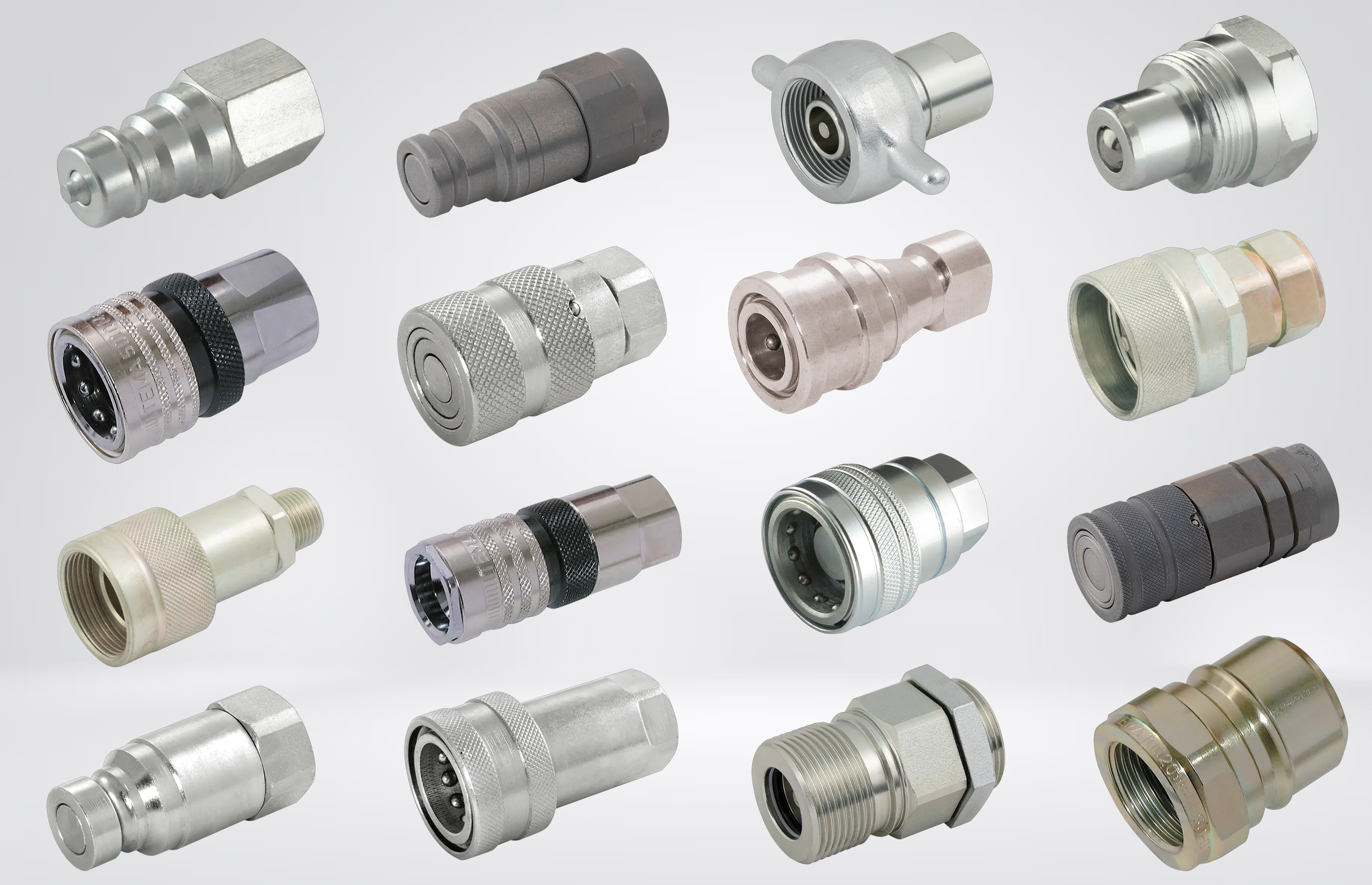
Hydraulic couplings are vital components in any hydraulic system, connecting hoses, tubes, or pipes to ensure seamless transfer of pressurised fluid. They play a crucial role in maintaining system integrity, reducing downtime, and preventing costly leaks, all while ensuring safe and reliable performance.
Whether you’re operating construction machinery, agricultural equipment, or manufacturing systems, the right hydraulic coupling can significantly impact efficiency and longevity.
In this complete guide, we’ll explore what hydraulic couplings are, the various types available, their key uses across industries, and the best practices for selecting and maintaining them to achieve maximum performance and reliability.
Firstly, we’ll take a closer look at what hydraulic couplings are and why they’re so important to modern fluid power systems.
What Are Hydraulic Couplings and Why Are They Important?
Hydraulic couplings are precision-engineered connectors designed to join sections of hose, pipe, or tubing in a hydraulic system. Their primary purpose is to enable secure, leak-free transfer of hydraulic fluid under high pressure, ensuring efficient system operation. These components are crucial to keeping machinery running safely and efficiently, particularly in demanding environments where reliability is essential.
When correctly specified, hydraulic couplings help maintain fluid integrity, reduce contamination risks, and allow quick connection or disconnection during maintenance or system changes. Choosing the right type not only safeguards performance but also protects expensive machinery from avoidable wear and damage.
The Role of Hydraulic Couplings in System Efficiency
Efficient hydraulic systems depend heavily on the quality and fit of their couplings. A well-matched coupling minimises pressure drops, prevents leaks, and ensures consistent fluid flow. Poorly fitted or low-quality alternatives, on the other hand, can cause system inefficiencies, overheating, and premature component failure. By maintaining correct pressure and preventing fluid loss, high-performance couplings directly contribute to reduced downtime and operational costs.
Next, we’ll explore the different types of hydraulic couplings available and how to select the most suitable option for your application.
Different Types of Hydraulic Couplings
Selecting the right hydraulic coupling is essential for achieving a secure, efficient, and leak-free connection. The best choice depends on several factors, including pressure range, flow rate, environmental conditions, and how frequently connections need to be made or broken.
Understanding the main types of hydraulic couplings helps ensure optimal system performance and compatibility across different equipment.
Quick Release Couplings
Quick release couplings are designed for fast and easy connection or disconnection without the need for tools. They are commonly used in agricultural machinery, mobile plant, and maintenance applications where speed and convenience are important.
Available in designs such as flat-face (to minimise fluid loss and contamination) and ball-type (for traditional, high-pressure use), these couplings improve operational efficiency and reduce downtime during equipment changeovers.
Threaded Hydraulic Couplings
Threaded couplings offer a more secure and durable connection, ideal for high-pressure or heavy-duty hydraulic systems. They typically feature robust metal threads that provide superior resistance to vibration and pressure surges. Commonly found in construction and industrial settings, threaded couplings are known for their long service life and strong mechanical grip.
ISO Standard Couplings
ISO standard couplings are designed to meet internationally recognised performance and interchangeability standards, such as ISO 7241-A or ISO 7241-B. These ensure compatibility between different brands and systems, making them a reliable choice for global operations or mixed-equipment fleets. ISO couplings are often preferred where maintenance flexibility and ease of replacement are priorities.
Specialised Couplings
For more demanding or niche environments, specialised couplings provide tailored solutions. These include non-spill couplings, which eliminate fluid loss during disconnection; high-pressure stainless-steel variants, offering superior corrosion resistance; and custom-engineered couplings for specific OEM applications.
Selecting these advanced options can enhance reliability in extreme conditions or where contamination control is critical.
Next, we’ll cover the key considerations to keep in mind when choosing hydraulic couplings, ensuring they’re suited to your system’s pressure, fluid, and connection requirements.
Key Considerations When Choosing Hydraulic Couplings
Choosing the correct hydraulic coupling is more than just matching size and thread type. It requires a clear understanding of the system’s operating conditions, fluid compatibility, and environmental factors.
Pressure Rating and Flow Requirements
Every hydraulic system operates within a specific pressure range, and your chosen coupling must comfortably exceed this limit. Underrated couplings can fail under pressure spikes, causing leaks or system shutdowns. It’s also important to consider the flow rate, a restriction caused by an undersized coupling can generate heat, reduce efficiency, and increase wear on other components.
Material and Seal Compatibility
Coupling materials and seals must suit both the working fluid and the surrounding environment. Steel and stainless steel are common for high-pressure or corrosive conditions, while brass and carbon steel are suited to lighter or less aggressive environments.
Seal materials such as Nitrile (Buna-N), Viton, or EPDM must be chosen based on fluid type and temperature range. Incorrect material selection can cause chemical degradation or leaks over time.
Connection Type and System Design
Connection style is another key factor, from threaded BSP, JIC, or ORFS designs to push-to-connect quick release systems. Compatibility with existing hoses, adaptors, and equipment ensures easier installation and fewer potential leak points.
When designing or upgrading a system, it’s worth considering future maintenance needs. Opting for standardised, easily replaceable couplings where possible can simplify servicing and reduce downtime.
Next, we’ll explore the industries that depend most on hydraulic couplings and how their performance contributes to everyday operations in demanding environments.
Industries That Depend on Hydraulic Couplings
Hydraulic couplings play a vital role across a wide range of industries, ensuring machinery and equipment operate safely, efficiently, and without interruption. From agriculture and construction to manufacturing and transport, these components are trusted wherever reliable power transmission and fluid control are required.
Construction and Plant Machinery
In construction, hydraulic couplings are integral to the operation of heavy machinery such as excavators, dumpers, loaders, and cranes. These systems experience constant vibration and high-pressure cycles, so robust and secure couplings are essential. Quick-release and threaded designs are often preferred for their ability to handle frequent equipment changes and resist the harsh conditions of construction sites.
Agriculture and Forestry
Agricultural and forestry machinery relies heavily on hydraulic systems for lifting, steering, and powering attachments. Tractors, harvesters, and log splitters all depend on quick-release couplings for fast and secure connections in the field. Flat-face couplings are particularly valued here for their clean disconnection and reduced risk of fluid contamination, helping keep hydraulic systems running smoothly across seasonal workloads.
Manufacturing and Material Handling
In industrial and manufacturing settings, hydraulic couplings are critical for maintaining the performance of automated systems, presses, and conveyor lines. Downtime in these environments can be costly, so durable, leak-free connections are a must. The use of ISO standard couplings provides flexibility and interchangeability, simplifying maintenance and ensuring fast replacement when needed.
Next, we’ll discuss why buying hydraulic couplings from Hoses Direct offers advantages in product range, technical support, and value, helping you find the right solution for every application.
Why Buy Hydraulic Couplings from Hoses Direct
When it comes to sourcing hydraulic couplings, reliability, product quality, and technical support are essential. At Hoses Direct, customers benefit from a trusted supply partner with industry expertise, competitive pricing, and a comprehensive range of hydraulic couplings suitable for every application.
Whether you’re maintaining machinery, expanding operations, or replacing worn components, Hoses Direct offers an efficient, dependable solution.
Wide Range of Trusted Brands
Hoses Direct stocks hydraulic couplings from leading global manufacturers known for performance and consistency. This includes options for quick release, threaded, ISO standard, and specialised couplings, ensuring compatibility with a wide variety of hydraulic systems. Customers can source everything from standard steel couplings to stainless-steel and non-spill designs, all available online for fast delivery.
Expert Technical Support
The Hoses Direct team provides expert assistance in selecting the correct coupling for your system. With in-depth product knowledge and the ability to cross-reference manufacturer specifications, they help customers identify the right part quickly and confidently. Whether you need advice on seal compatibility, pressure ratings, or thread types, technical guidance is always available to ensure a perfect fit.
Competitive Pricing and Fast Delivery
Offering a strong balance between quality and value, Hoses Direct delivers industry-standard products at competitive prices. Most couplings are available from stock, enabling fast dispatch across the UK. This combination of affordability and speed makes Hoses Direct a reliable partner for both individual buyers and businesses looking to minimise downtime.
Summary
Hydraulic couplings are an essential part of any hydraulic system, providing the secure, leak-free connections that keep equipment running efficiently and safely. Selecting the correct type, whether quick release, threaded, ISO standard, or a specialist design, depends on pressure, fluid compatibility, and environmental conditions.
Across industries from construction and agriculture to manufacturing, the right hydraulic coupling makes a measurable difference to productivity and reliability.
With access to trusted brands, expert technical advice, and fast UK-wide delivery, Hoses Direct provides the dependable solutions professionals need to keep their systems operating at peak efficiency. Get in touch today to discuss your requirements.