


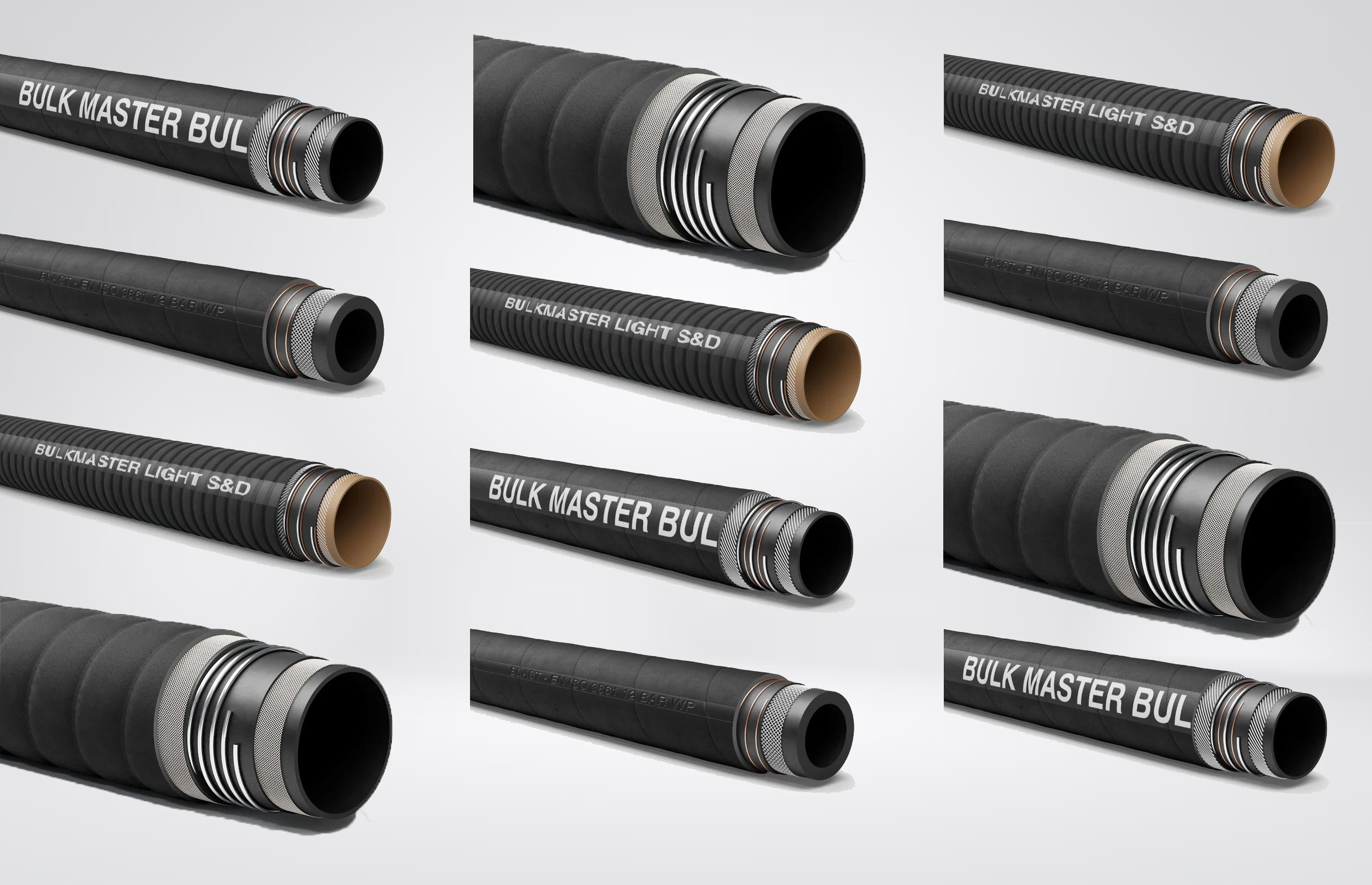
Quarries and aggregate processing plants expose industrial hoses to conditions that quickly reveal the difference between a hose that’s simply adequate and one that’s genuinely suited to the job. Abrasive materials, heavy equipment, long operating hours and constant movement all contribute to wear that would take years to develop in many other industries.
It’s often assumed that frequent hose failures are simply part of working in these environments, but that’s rarely the full picture. While hoses are consumable components, replacing the same assembly every few months usually points to a specification issue rather than an unavoidable maintenance cost. The hose may be perfectly capable of handling the system pressure, yet still fail because it’s being dragged across crushed stone, repeatedly crushed by mobile plant or carrying abrasive material at a flow rate that accelerates internal wear.
At Hoses Direct, we regularly help customers identify why hose assemblies aren’t delivering the service life they expected. In many cases, the solution isn’t choosing a more expensive hose but selecting one that’s better matched to the application. The media being transferred, the operating environment, routing, flexibility, abrasion, temperature and installation all have a direct influence on reliability.
What Is the Hose Being Used For?
One of the first questions our technical team will ask is, “What’s the hose actually doing?” That might sound obvious, but it’s surprising how often replacement hoses are specified using only the size and pressure rating of the failed assembly, without considering whether it was the right hose in the first place.
Quarry and aggregate sites use hoses for a wide range of duties, each placing different demands on the hose construction. Selecting a product that’s designed around the application rather than treating every hose as a general-purpose replacement usually results in better reliability and longer service life.
Water Transfer and Dust Suppression
Water is used throughout quarry operations for dust suppression, wash-down systems, dewatering and transferring water around the site. Although water itself is not abrasive, the environment usually is.
These hoses are constantly pulled over rough ground, around stockpiles and across concrete hardstanding. The ability to resist external wear is therefore just as important as carrying the required pressure. A hose that kinks easily or becomes difficult to handle after prolonged outdoor exposure will often create operational issues long before it reaches the end of its pressure capability.
Where hoses are deployed and recovered regularly, flexibility also becomes an important consideration. A slightly heavier hose with a more durable construction may provide a much longer working life, but if operators are moving it several times a day, excessive weight can reduce productivity and encourage poor handling practices. Finding the right balance between robustness and usability is often more beneficial than simply selecting the toughest hose available.
Slurry and Abrasive Material Transfer
This is where hose selection becomes much more specialised. Slurry containing sand, stone or mineral aggregates creates continuous internal wear as abrasive particles travel through the hose at high velocity.
In these applications, the internal tube compound is often the defining factor in service life. A general-purpose water hose may have adequate pressure capability but will wear rapidly if used for abrasive slurry. Purpose-designed slurry hoses use highly abrasion-resistant tube materials and robust reinforcement to cope with these demanding conditions.
Flow rate also needs careful consideration. Higher velocities can increase production, but they also increase the rate of internal erosion. Sometimes increasing the hose diameter slightly can reduce flow velocity enough to extend hose life without significantly affecting throughput.
Fuel and Oil Transfer
Quarries also require hoses for diesel delivery, lubrication systems and hydraulic oil transfer during routine maintenance. Here, chemical compatibility becomes the priority.
Even if a hose appears suitable from a pressure perspective, using the wrong tube material can lead to swelling, hardening or gradual deterioration after prolonged exposure to oils or fuels. Selecting a hose that’s designed specifically for the media being transferred provides a safer and more reliable solution over the long term.
Which Hose Materials Perform Best in Quarry Environments?
There is no single hose material that performs best in every quarry application. The right choice depends on the media being transferred, how the hose is used and the conditions it will face throughout its service life. A hose that performs exceptionally well for compressed air may be completely unsuitable for slurry transfer, while a lightweight water hose designed for portability may not survive long in areas with constant abrasion.
Selecting the correct material is about understanding where its strengths outweigh its limitations.
Rubber Hoses
For many quarry and aggregate applications, rubber remains the benchmark. Its combination of flexibility, durability and resistance to mechanical damage makes it well suited to demanding environments where hoses are regularly handled, dragged across rough ground or exposed to impacts from equipment and materials.
Rubber also performs well where vibration and repeated flexing are unavoidable. Unlike some more rigid materials, it generally tolerates movement without placing excessive stress on the reinforcement or couplings, provided it is installed within its recommended bend radius.
It’s important to remember that “rubber hose” covers a wide range of constructions. Different tube and cover compounds are formulated for specific duties, whether that’s water, compressed air, fuel, oil or abrasive slurry. Two rubber hoses may appear almost identical externally while offering very different performance in service.
PVC Hoses
PVC hoses are popular because they are lightweight, economical and easy to handle. They are often an excellent choice for temporary water transfer, wash-down operations and other applications where flexibility and ease of deployment are priorities.
Their limitations become more apparent in harsh quarry environments. Constant contact with sharp aggregate can wear through the outer surface more quickly than heavy-duty rubber constructions, and lower temperatures may reduce flexibility, making the hose more prone to kinking during handling.
Specialist Abrasion-Resistant Constructions
For continuous handling of abrasive materials such as sand, stone fines and mineral slurry, purpose-designed slurry hoses offer significant advantages over general industrial hoses. These products are engineered with highly abrasion-resistant tube compounds, substantial reinforcement and heavy-duty outer covers to withstand sustained exposure to both internal and external wear.
Although these hoses represent a higher initial investment, they often deliver a much lower lifetime cost in demanding applications. Fewer replacements mean less downtime, lower labour costs and reduced disruption to production, these benefits quickly outweigh the difference in purchase price where hoses operate continuously.
How Hoses Direct Helps Customers Choose the Right Construction Hose
Every quarry operates differently, so there is rarely a single hose that’s right for every application. Two sites may both require a 2-inch water delivery hose, but one could be used for occasional wash-down while the other is dragged hundreds of metres across abrasive ground every day. On paper, the specifications look similar, yet the demands placed on the hose are completely different.
That’s why Hoses Direct focuses on understanding the application before recommending a product. Rather than matching only the thread size or working pressure, our technical team considers how the hose will perform throughout its working life.
When reviewing an application, we’ll typically look at factors such as:
- The media being transferred.
- Working pressure and any pressure fluctuations.
- Required flow rate and hose length.
- The level of internal and external abrasion.
- Operating temperature and weather exposure.
- Whether the hose is fixed or handled regularly.
- Routing, bend radius and potential crushing hazards.
- Compatibility with the required couplings and fittings.
Looking at these factors together often highlights opportunities to improve reliability without unnecessarily increasing cost. In some cases, the answer is a more abrasion-resistant hose. In others, improving the routing, selecting a different hose diameter or choosing a more suitable coupling provides a greater improvement than changing the hose specification alone.
Hoses Direct supplies a comprehensive range of industrial hoses suitable for demanding quarry and aggregate environments, including heavy-duty water delivery hoses, compressed air hoses, suction and delivery hoses, slurry hoses and specialist hose assemblies for abrasive applications.
Because different products are designed for different operating conditions, recommendations are always based on the engineering requirements of the application rather than a one-size-fits-all approach. Speak to the expert team today to discuss your application, and we’ll recommend the best-suited hose to keep your site running.
Email: [email protected]
Phone: 0333 6000 501